She ‘just loved him’

Linda Lee Bukowski gives thumbs up to Hollywood’s latest take on her husband’s life and work

By Justin Chapman, Pasadena Weekly, 9/14/2006

The legacy of poet, novelist and underground cult icon Charles Bukowski is alive — not only at The Huntington, but also with the release of “Factotum,” a new movie chronicling the drifting poet’s misadventures in labor before his immense talent was recognized by millions around the world.

In the film, Matt Dillon plays Hank Chinaski, Bukowski’s longtime, thinly veiled alias in his books. Adapted and directed by Bent Hamer, the new film’s story is very different from 1987’s “Barfly,” in which Mickey Rourke played an exaggerated caricature of Bukowski, according to his widow.

“Hank would have loved this movie,” Linda Lee Bukowski told the Weekly in an exclusive telephone interview from her home in San Pedro. “I don’t think there’s one thing that I questioned at all when I saw the film.”

That’s quite an endorsement. But more important than the silver screen is the man himself, whose complex legacy Linda has tirelessly preserved in her home and her heart.

Pasadena Weekly: How did you two meet?

Bukowski: I’d been a reader of his for many years, when he was being published in Open City and LA Free Press in the ’60s and early ’70s. I had read all his books and gone to his poetry readings. At one of his readings I decided to introduce myself and it began a friendship that evolved later on into what ended up being our loving marriage. It was interesting because it was at the time he was doing “research” for the book “Women.” He was just curious; I was another curiosity. But he was a curiosity to me, too, because I felt that I knew him in a certain way through his books, and I think I knew him in a spiritual way before I met him. I think people feel that about him because he speaks the truth from the gut.

Why did you decide on The Huntington for his archive?

There are several reasons, but ultimately because of the nature of The Huntington. Just who they are and every single thing they do, whether it’s botanical gardens, archiving libraries, art, landscaping or architecture, they’re the best.

Everyone I’ve met there is so genuine and focused on their particular area, and that gratifies me to have Hank taken care of in such loving hands. Other places were always an option because I didn’t want to let the archive just sit and stagnate.

I love The Huntington, personally, and I’ve been going there for about 30 years. When I met Hank, I had been going there already. He knew I loved that place; he didn’t particularly care to go walking in gardens, but he understood it for me, and it inspired me because after he’d gone I created a little botanical garden myself.

Do you still live in the same house?

Oh, yes. We moved here in 1978. It’s like a living museum. The Charles Bukowski Foundation will continue after I leave this world, and our home here in San Pedro is going to be a museum. Great writers have their little houses; I think Ernest Hemingway has three or four of them around the world. I’ve kept it the same as it was. I haven’t touched his room and dining room. I go dust a couple times a year or just sit in there and turn his old Mac computer on.

What was your involvement with “Factotum”?

I met Jim Stark, the producer, and Bent Hamer, the director. They got in touch with me eight years ago. They both flew out here and came over, and we had a grand time. For some reason we all clicked and connected.

They kept within the parameters of Hank’s truth without elaborating or exaggerating like some people have done in films and sort of made them almost caricatures or cartoonish. But everybody has their own way. It’s hard to walk the line with that because you can go too far in either direction. I think “Factotum” is straight on. I think they nailed it. It was a long haul, but they worked hard and pulled it off. I don’t think there’s one thing that I questioned at all when I saw the film. That’s the neat thing about Stark and Hamer; I trusted them implicitly within the first few moments I met them. I don’t know why. It was this intuitive awareness that they were going to make this happen the way Hank would have loved this movie. “Barfly” was like a fluff piece.

This is wonderful. Now there’s more to come. All of his other books have yet to be made into films. “Post Office” is owned by a film director who’s hopefully getting interested in actually doing it. He’s owned it for about 35 years. He bought it from Hank when he was alive. There’s hope that within the next couple years that will come to fruition. Wouldn’t that be cool? And then “Women.” Can you imagine? Oh, my God. And “Hollywood”?

That’s the thing about his work, there’re so many things to enjoy and laugh at. People take him so seriously sometimes. They take that he’s a mythological dirty old man drunken misogynist so seriously it’s hard for those who criticize him to let that go and read the mastery of his words, for crying out loud.

Do you think success helped Hank later in his life with his writing?

Absolutely. You can’t deny it. When you physically leave an element that has been oppressing you in certain ways due to circumstances throughout your life, leaving that and finding wider horizons is something that would help anybody. He had detractors on that. People got mad at me because they said I changed him. I said, “Well, I didn’t change anybody.” We don’t do that. We change ourselves. He just saw a larger opportunity to be free from the heavy burdens he was carrying around with him all those years.

Hank was on a certain wavelength; he was just evolving. People got mad because he didn’t keep talking about fucking whores with big fat thighs and all these things, which is fine to have, but enough is enough, and you move on in life. A lot of those people are bitter in their own selves, maybe unsuccessful writers — that’s what Hank would say. He didn’t mind it. He was a great guy. He was the best. Beyond all that wild and crazy stuff, which was there, but he evolved. If you have any kind of sensibility in your life, you evolve. Hopefully it’s positive and in a way that’s loving to oneself and to others. He decided to open a little door of compassion. And I didn’t try to tell him anything or teach him anything. That’s not my thing. I just loved him. He was a man to me, and then he was a writer.


His way

The ‘absolutely honest’ Charles Bukowski finds a home at The Huntington

By Nikki Bazar, Pasadena Weekly, 9/14/2006

The Huntington Library, Art Collections and Botanical Gardens has officially announced the donation of a significant literary archive of Los Angeles poet and novelist Charles Bukowski to the institution by Bukowski’s widow, Linda Lee Bukowski.
Charles Bukowski, who lived from 1920 to 1994, penned more than 50 novels and books of poetry such as “Ham on Rye,” “Women,” “Hollywood” and “Factotum,” which was recently made into a film starring Matt Dillon.
For the first half of his life, Bukowski worked assorted odd jobs, including a decade-long stint with the US Postal Service. He wrote about his dead-end work, his abusive childhood and his dramatic bouts of drinking and debauchery. He also often wrote graphically of sex and violence, and became known for his potent depictions of “life on the streets” that resonated with readers who felt disenfranchised or marginalized.
By the latter half of his life, Bukowski began to be seriously considered as a great contributor to American literature. His books have sold millions of copies and have been translated into almost every European language.

A ‘stunning’ gift
Sue Hodson, curator of literary manuscripts at The Huntington Library, received a call a couple of years ago from an attorney for Linda Lee Bukowski inquiring about placing a literary archive. Hodson was happy to help, although she knew The Huntington would probably not be able to win a bidding war over the collection. But a year later, Hodson heard from Linda again and, learning it would be a gift, carefully detailed The Huntington’s access policies and preservation tactics.
“Seeing the stuff go out of the house, that’s hard for any donor to do, especially a surviving spouse. It was important for us to recognize that and be aware of it,” says Hodson.
Unlike many university or public libraries, The Huntington does not allow just anyone from the public to access their research collections. Researchers who do not already have a Ph.D. must formally apply for reader privileges, which include providing two references. Once accepted, readers view materials in a specially monitored reading room where bags and pens are prohibited. Readers are able to handle original material, but if the material becomes too fragile, it is retired from use and replaced by a copy.
Beyond its sterling reputation for taking great care with historic works, what also helped was Linda’s longtime relationship with The Huntington as a visitor.
“When she and her husband would drive up this way from their home, he would drop her off here, and she would spend the afternoon in the garden while he went over to Santa Anita and spent the afternoon at the races betting on the ponies. So she already had a great affection for The Huntington. It all just came together,” says Hodson. “The fact that Linda could see her way to make this a gift is just a stunning and incredibly generous thing for her to do, which you don’t often see in this day and age.”
The collection is still pouring in, and even Hodson doesn’t know how big it will eventually turn out to be. In the meantime, The Huntington has received hundreds, if not thousands, of corrected typescripts of poems and also of Bukowski’s popular novel “Ham on Rye” and the screenplay to “Barfly,” a 1987 film based on his life. Many of the typescripts are decorated with original doodles by the author. The archive also contains nearly every first edition of Bukowski’s published books, scores of fine press and foreign editions and several dozen early small press publications containing his work.
One fine press 1968 edition of “At Terror Street and Agony Way” is one of only 75 hardbound editions published by Black Sparrow Press that have
original signatures and illustrations by the author. Early grassroots publications include several issues starting in the ’40s of a small literary journal titled “Matrix,” which Bukowski continued to contribute to even after he became famous. Linda also donated many first editions of books including “Screams From the Balcony,” “Open All Night,” “Betting on the Muse,” “Reach for the Sun” and “What Matters Most Is How Well You Walk Through the Fire,” to name a few.
Additionally, The Huntington has received a number of Bukowski’s fan letters. Many of them, despite the graphic sexual nature of his work, are from women. “He wasn’t handsome, certainly,” says Hodson, “but there was a lot of character and a lot of mystery in his face. He was extremely charismatic, and I think a lot of women responded to that.”

An ‘odd’ fit?
In 1965, John Martin was new to the world of publishing and sought out Charles Bukowski, then working at the Post Office, and recruited him to join the upstart Black Sparrow Press. A few years later, Martin offered Bukowski part of his own salary as a monthly stipend to help the then-budding author quit his job and dedicate himself entirely to writing. A relationship was born, and Bukowski would stick with Black Sparrow for the rest of his life.
Bukowski’s writing, he said, found a way of connecting with all sorts of different people.
“The whole drift in American letters has been communication — clear, concise, accurate communication — and that’s the way that Bukowski wrote his novels, his short stories and his poems: without any artifice, without any desire to implant hidden meanings or dodge issues. He had the talent to articulate what he felt and saw, so that made him very important, and it changed the whole course of American poetry,” says Martin, now retired from publishing.
Yet, it’s the graphic nature of Bukowski’s work that may have some raising their eyebrows at
The Huntington’s latest addition. Hodson is quick to dismiss the suggestion.
“The Huntington has this very staid, proper, conservative image, and Bukowski is anything but, and we like the fact that he’s here. It pushes the envelope a bit, and that’s good for us. We’re not all Jane Austen and high tea here; there’s more than that. The overwhelming response I’ve gotten from people is completely positive,” she says.
Martin also believes the two are a good match.
“Bukowski does have a reputation as ‘the outsider’ and as ‘the rowdy poet,’ but that’s exactly what they said about Walt Whitman a hundred years ago; his work was once referred to as ‘barbaric yawp.’ Now, of course, we know that Whitman was the most important poet of the 19th century in America, and who knows where Bukowski will end up? It could be the same thing,” he says.
Still, Hodson acknowledges that some of the material may present a challenge when it is displayed as part of the debut Bukowski exhibit, slated for late 2010.
“I do have to think about the fact that families come through and that school groups come through. However, we’re not in the business of censorship here. I don’t know yet in every detail how we’ll handle it, but I’m not going to censor or sanitize or lighten Bukowski. He is one of the most important and original writers in American literature, and we can’t pull the teeth. He is what he is.
“We collect authors that we think have a lasting legacy as writers, whose works will stand the test of time, and who are worthy of research and study and appreciation by the public. Bukowski fits all of those, so I’m not concerned if people disagree with us,” she says.

Mass appeal
Like it has in other controversial exhibits, such as the one on 20th-century novelist Christopher Isherwood that elicited criticism because the author was gay and not part of the typically accepted literary canon, The Huntington may provide a forum for visitor comments that can later be incorporated into the collection.
Naysayers aside, Hodson predicts that this will be one of the most popular collections at The Huntington. Already she has received numerous letters, emails and phone calls from people excited to get at the archive, which won’t be available to researchers for at least a year, if not two. And a sold-out Sept. 20 event in celebration of Bukowski was two-thirds filled before The Huntington even made an official announcement.
“I’ve just been stunned by this,” Hodson says of the overwhelming response, “and yet in retrospect I shouldn’t have been. His writing speaks to the common man and woman. I had an archivist, a colleague of mine, email me after we made the announcement. He said that at one point in his life, when he was working a dead-end job, very much as Bukowski did, he would paste Bukowski’s poems on the walls and that would help get him through those hard days.”
Perhaps part of his appeal, says Martin, has something to do with the man himself.
“I used to tell people who had this erroneous view of Bukowski, ‘I never saw him drunk, I never heard him raise his voice, I never saw him angry.’ Granted, everybody has a private life that people don’t see, but I never saw any of those things. I considered him the most intelligent, kind, careful, honest person I’ve ever known. If I really needed the answer to a difficult question and there was one person I could ask, the only person I know who would give me an absolutely honest, straight, unadorned answer would be Bukowski, because that’s the way he thought and that’s the way he did things,” he says.

In Siam I Am

Keeping chaste in Thailand and other adventures

By Justin Chapman, LA Weekly, 8/25/2006

"I have a girlfriend," I thought as I tried to avert my eyes. "Why am I in a Bangkok brothel at three in the morning?"

I knew that the Thai government imposes a strict 2 a.m. whorehouse curfew for the hundreds, if not thousands, of institutions of temporary love across the various provinces of Bangkok, or as the locals call it, Krung Thep.

I tried to focus on my Singha beer instead of the 20 assorted Asian girls, not more than 25 years old, lined up next to each other on the couch. Not naked exactly, but the message was crystal clear.

At least I wasn't alone. Two other 19-year-olds I'd just met a couple hours earlier were busy chatting it up with two of the girls. I sat there awkwardly and nursed my brew.

In situations like these, it's important to take a moment to retrace your steps and figure out how (and why) you got here.

I had never been to Asia before, and had no idea what to expect. I signed up for this "humanitarian" vacation with 14 students from around the country and one adult leader to teach English in a rural school, help with farming, and explore this tragically beautiful land.

We stayed in the airport hotel the night we landed, and that's when two of the guys and I went out and ended up at one of the seedier places in the downtown area. We were between the Buddhist temples and corporate skyscrapers glittering like gold under the dim streetlights and the half-finished freeways that they stopped building 20 years ago because "the economy collapsed, and they just couldn't complete it," said Tom, our taxi driver.

We arrived at a hole-in-the-wall down a dark alley off the main road. The mamasan, a round, 60-something Thai woman, asked us if we wanted a girl for the night. The mamasan counsels all of the girls who work for her about their most intimate problems such as pregnancy or thoughts of suicide.

I had to pass on her offer. The next morning we traveled in a blindingly colorful tour bus to the Phanom Rung Temple, built by a king in the 10th century on top of an extinct volcanic cone. It took us six hours to reach the top of this hill, overlooking miles of vast Thai farmland, and behind the mountains -- Cambodia. It is the largest and best restored of all the Khmer monuments in Thailand, created at the apex of Angkor architecture. Its artistic achievement is on par with the temple Angkor Wat in Cambodia, which covers more than 200 acres.

The next four days we stayed in a rural village near the Thai/Cambodian border called Ban Kraut, where about 125 families lived. They were amazingly generous and friendly people. Life was very simple in the village. Showers consisted of standing in the bathroom naked and pouring buckets of cold water over you from a concrete tub.

One morning we spent two hours at the Cambodian border, but we couldn't get clearance into the country because some Cambodians had stolen several Thai motorbikes. Looking for an excuse to exercise its power, the Thai government shut the border down.

We drove on to the Northern Surin Province and rode elephants through the jungle, then down to the waterfront past Bangkok and got on a boat to Koh Samed, a beautiful resort island, where we went snorkeling, frequented bars, rented motorbikes and crashed often. Fortunately, the resort offered a menu of massages at their spa.

Back on the mainland we went shopping in Bangkok in the open-air markets, which were very Western. They were directly outside of a disappointingly familiar indoor mall, where every other store sold cell phones.

That night we went to a popular attraction for young tourists, Kaosan Road, where hundreds of people filled a small street that stretched for about half a mile packed with pharmacies, bars, strip clubs, restaurants, internet cafes and shops.

Thailand is a mysterious and beautiful place with hard-to-understand priorities. Daily life is an intense and overwhelming adventure in the land of Siam.

Justin Chapman is a 20-year-old freelance journalist and an elected member of the Altadena Town Council.


Longer version:

“The Land of Siam”
by Justin Chapman

“I have a girlfriend,” I thought as I tried to avert my eyes. “What the hell am I doing here? Why am I in a Bangkok brothel at three in the morning?”
I knew perfectly well that the Thai government imposes a strict 2am whorehouse curfew for the hundreds if not thousands of fine institutions of love across the various provinces of Bangkok, or as the locals call it, Krung Thep (more on that later). 
“The difference between me getting arrested tonight or not completely depends on the ‘protection’ that the mamasan pays off to the cops. This being one of the seedier places still open past the curfew, one must ask oneself, ‘Do I feel safe?’ Hmm. Quite the quandary.”
I tried to focus on my Singha beer instead of the 20 or 30 assorted Asian girls, not more than 25 years old, lined up next to each other on the couch. Not naked exactly, but the message was crystal clear. 
At least I wasn’t alone. Two other 19 year olds I just met a couple hours earlier were busy chatting it up with two of the girls. I sat there awkwardly and nursed my brew.
In situations like these, it’s important to take a moment to retrace your steps.

*             *               *

I had never been to Asia before, and had no idea what to expect. I signed up for this “humanitarian” vacation in December of 2004, and had until August to think about what I was getting myself into. There was to be 14 of us, aged 18 to 23, including our 40 year old leader, Steve Ferringer.
I had been to Australia & New Zealand back in the summer of 2000 with the same program, People to People International, founded by President Eisenhower, and again to Colorado & Wyoming for a peace summit in the summer of 2003. This was different. It was a test run designed for young adults, meaning we were responsible for ourselves and would not be meeting each other beforehand. We all came from different states.
We got to know each other quickly once we touched down in the land of Siam. We stayed in the airport hotel that night, and that’s when two of the guys, Tyler Piper & Bobby Wall, and I went out on the town at 3 o’clock in the morning. That’s why we ended up at one of the seedier places in the downtown area, because we wanted to get drunk (oh-so-legally), in between the Buddhist temples glittering under the dim streetlights like gold, the skyscrapers as impressive as ours, and the half-finished freeways which they stopped building 20 years ago because “the economy collapsed, and they just couldn’t complete it,” said our taxi driver, Tom.
We arrived at S & N Bar, down this dark alley off the main road. The place was a hole in the wall, and the aura of it was indistinguishable. The mamasan, a round, 60-something Thai woman, asked us if we wanted a girl for the night for 5,000 baht, roughly 90 to 100 American dollars. The ratio is 40:1.
The mamasan counsels all of the girls who work for her about all of their most intimate problems or confessions, such as pregnancy or suicide. She advises they charge extra for anal intrusion, requested mostly by the French, Italians, and Americans. “I'm good,” I said, but she convinced me to just talk to a girl and buy her two drinks. Tyler and Bobby were already well acquainted with their picks.
The mamasan took me by the hand and led me to the group, then asked me to pick out a girl. It was very awkward because I didn’t even want to be there. I had a girlfriend back home whom I loved and adored. Someone I would never want to hurt.
I ordered another Singha small and sat down next to a girl, but not before asking Bobby if he bought a pack of smokes, which he did. I don’t smoke, mind you. Only on vacation, you understand.
The best part about this place was the small Chinese Buddhist shrine at the foot of the main entrance, to “protect the place.”
Bobby had to borrow money from Tyler and me while we played pool upstairs. When we got back to the hotel, Tom made us wait with him by the car while Bobby ran upstairs to get the cashola. The problem was Tom said quite a few Americans had played this trick on him before, so we could understand his skepticism: they told him to wait by the car while they ran up to their room for the money, then they would check out of the hotel without notifying him and run across the concealed bridge directly over his head to a waiting airplane. Two hours later Tom would be told the guest checked out, and he would have to deal with the pimps and the mamasan back at S & N for his share of the deal.  It was a horrific scene, and everyone was trying to convince us otherwise, even Tom. His livelihood depended on it. While I was waiting for Bobby and Tyler to finish up, I walked out to the sidewalk by the main road to smoke a stogie and drink my beer. Tom followed me and asked me to come back inside.  “There are police out here,” he told me, then explained how if I were anywhere but downtown Bangkok, the police would take one good look at me and arrest me for buying a prostitute, even if I hadn’t planned on doing so. But here in DT Bangkok, the bar and brothel owners paid a hefty sum to the police to look the other way.

*          *              *

The next morning, after paying off our hotel bills, we set off on the Thai highway. People, cars, and scooters were everywhere. I wouldn't even want to attempt driving in these hectic conditions.
There were pictures of the queen adorned with flower arrangements every couple of blocks (you don’t talk crap about the queen), along with advertisements for “Wedding Crashers” and McDonald's. Along the highway ran a forest green ravine. On the opposite bank, sloppy wooden houses on stilts looked as if they were about to slip into the murky sewage water. We didn't see one single person in that water. Sometimes I could see down to the alleys and streets below the highway through the cracks in the meridian. A homeless mother and her child push a shopping cart over ignored vegetation and around small abandoned structures, their expressions sunken. Sex tourism is an ugly, ugly thing. I don't care what anyone says. Our guide was a lady named Aea. She told us many things in broken English, such as land rapists stealing forest from the government, cutting down too many trees, not planting any new ones, thus causing a lack of rain and a drought, even during those wet winter months of July and August; such as Buddhist teachers in southern Thailand being assassinated by Moslem extremists who want independence from the establishment; such as wives and daughters having to work now, too, alongside their husbands while still cooking, cleaning, and serving the man in what has become an embarrassment to them, their other option being the nighttime workforce.
We traveled in a sore thumb of a tour bus to the Phanom Rung Temple, built by a king in the 10th century on top of an extinct volcanic cone so he could live as a hermit. It took us 6 hours to reach the top of this hill, overlooking miles of vast Thai farmland, and behind the mountains--Cambodia. It is the largest and best restored of all the Khmer monuments in Thailand, created at the apex of Angkor architecture. Its artistic achievement is on par with the temple Angkor Wat in Cambodia, which is over 200 acres. The craftsmanship in the stones was absolutely amazing.
The next four days we stayed in a small, poor village near the Thai/Cambodian border called Ban Kraut, where about 125 families lived. They were amazingly generous and friendly people. We each stayed in a different family’s home for the three nights and they gave us anything we needed. They trusted us more than we trusted them. They cooked us delicious meals, setup bedding for us, washed our clothes. The language barrier was difficult at first but we soon found new ways to communicate with each other.
Life was very simple in the village. Showers consisted of standing in the bathroom naked and pouring buckets of cold water over you from a concrete tub. We were lucky enough to have a Western toilet, as opposed to a hole in the ground, but there was no toilet paper and no flusher.
The village was basically a jungle. The foliage was a deep green rarely seen in suburbia. The only eyesore was the trash. The people of this region, until recently, only used biodegradable products, so they don’t understand that it’s not OK to throw plastic and other trash on the ground. Some places it piled up several feet high. You look around and see a contrasting sea of green and white.
The first morning we took a tour of the village and learned how they make rubber from rubber trees. They have huge forests of these trees lined up perfectly, each with a little cup attached to the trunk, just below a cut where the rubber sap slowly drips out. We also planted rice in a muddy paddy field.
The morning after that we spent two hours at the Cambodian border, waiting for clearance into the country. Earlier that week some Cambodians snuck into Thailand and stole several motorbikes, a very popular method of transportation in Southeast Asia. Looking for any excuse to exercise its power, the Thai government shut the border down, and we weren’t allowed in.
It was probably just as well. Off the roads in Cambodia the land is littered with thousands of land mines from the 1970s, put in by the Chinese, the Vietnamese, Pol Pot, and of course the US. It costs $5 to put one in the ground, and about $1,000 to take it out. 
There were little posts everywhere, a Buddhist shrine, a rifle tower, and poor Cambodian women selling food and such to the soldiers. A couple trucks were packed to the brim with thatched roofs, which are made in Cambodia and sold to the Thais because the labor is so damn cheap.
There were officials from three or four different agencies present. I was talking to the head honcho on site with our translator, and he offered me a cigarette. We also went up into the rifle tower, and looked out over Cambodia. Bobby and I ate some guava and other fruit with chili powder & cane sugar with the Thai soldiers and tried to communicate with each other. Every afternoon we went to the local school and taught English for three hours.
My partner, Eric Summerfield, and I had about sixteen 6th graders, aged 11-14. We taught them some useful phrases and played games. At one point a couple students wrote “I love you, Eric & Justin” on the board.
We got some money together and bought the school three DVD players, three English lessons on DVD, sports equipment, and other supplies. They were very grateful and offered us gifts of pillows, flowers, and cards when we left the third day. It was hard to go. The children chased our vans as we drove away.
We talked about how economic strains have been forcing these people to think
more like Americans: competition, capitalism, success, higher education, etc. For example, in the class we taught, there was one girl who exceeded over everyone. Even a generation ago, there was no exception like that. Next time there will be five exceeding students, and then ten. The stress to push for more in life is becoming essential for survival. We drove on to the Northern Surin Province and road elephants through the jungle. When we arrived, I was in awe of the elephants. These were truly incredible creatures. At one point, there were about ten elephants surrounding us, including babies, lifting up their trunks and screeching.
The Thais that rode them with us had these spike tools they would dig into the elephants’ foreheads if they disobeyed. I bought some sugar cane and fed it to a couple babies. I felt their tusks as well, which had been cut down. I think they sold the ivory. At least they didn’t kill them. They abused all their animals. Smacked their malnourished dogs around and such.
After we said our tearful goodbyes at the village, we drove down to the waterfront passed Bangkok and got on a boat to Koh Samed, a resort island half an hour off the mainland. Ten steps out of our resort was the beach: crystal blue water and smooth white sand. Our cottages looked out over the sunset side of the island.
We went to several bars around the island for the three nights we stayed there. At Silver Sand there were fire dancers on the beach, twirling sticks on fire around their bodies so fast they formed constant rings.
We also rented motorbikes and crashed often. Several minor injuries, a few major ones. Fortunately, the resort offered a menu of massages at their spa. I got a flower petal bath with a body oil massage, a traditional Thai massage, and foot reflexology.
An American at Silver Sand told us that that day some Thai girl, who came here from another part of Thailand for vacation, was swimming in the ocean and went too far. Her boyfriend swam after her to rescue her, and got tired himself. He couldn't handle the waves, and quickly passed out. They brought him back to land, but nobody on the island knew CPR, so they hung him up by his feet and shook him. He died, but the girlfriend survived. The next day red flags guarded the beach. One day we went out on a boat to the other side of the island, anchored, and went snorkeling in the Gulf of Thailand. After that I sat in the back of the boat with the Thai captain and first mate and helped them cook fish wrapped in foil over a charcoal fire. It kept us warm because it started raining. The first mate made me a delicious vegetable dish with rice and gave me a free beer. When the fish was done, they cooked squid. After that we headed back to the pier and stopped at a shark farm. There were several squares of water sectioned off by nets. Thin wooden walkways surrounded the squares, nailed to buoys. Someone could've easily fallen in. There were a lot of colored fish, old sea turtles, and good sized sharks.
One of the days on the island was the queen’s 73rd birthday, and we partied hardy. I checked several newspapers that day, and not one of them had any word of dissent or disapproval about the queen.
After we left the island we went shopping in Bangkok in the open air markets, which were very Western. They were directly outside of a disappointingly familiar indoor mall, where every other store sold cell phones. Outside the McDonald’s in the mall stood a life-size statue of Ronald McDonald in a wai position (putting your hands together near your forehead in a respectful bow).
That night we went to a popular attraction for young tourists, Kaosan Road, where hundreds of people filled a small street that stretched for about half a mile. There were bars, strip clubs, pool halls, souvenir shops, Internet cafes, a 7-11, a pharmacy, and food carts with several different kinds of meat or falafels. Closer to midnight the girls in leopard skin leotards came out and started flirting with everyone who passed by, guy or girl, trying to get them to come into Club Lava or Superpussy or Gulliver’s Travels.
One guy tried to get us to go in his taxi to a peep show where girls inserted tubes in their vaginas while you held a balloon in your hand. Then they would put darts in the tube, shoot them out, and pop the balloon. As compelling & enticing as that sounded, images of some dark basement dive on the outskirts of Bangkok convinced me to pass on the gentleman’s offer.
The next morning a couple of us had to go to the local hospital, a Seventh Day Adventist institution, to get our various wounds, bites, and rashes looked at. We were immediately taken in to see an American, Dr. Nick, in front of several Thais that were waiting before us, and were still waiting when we left. The entire visit to Mission Hospital, including the many prescriptions I had filled, cost me only $18 American, which was not even worth the hassle of going through the insurance company for reimbursement.
Then we went to the Grand Palace and Emerald Buddha. The palace area was at least 60 acres. It was guarded by a huge white wall that wrapped around the property, along with several Thai soldiers with assault rifles and a mounted machine gun aimed right at the entrance. There were about 50 Thai temples and buildings. One was a gigantic bell shaped structure made out of solid 14 karat gold tiles, about one square centimeter each. We saw the building President Bush stayed in during his trip here two years ago for an OPEC conference. We went inside many temples and I prayed to the emerald Buddha sitting on the throne so peaceful and unaffected.
After that palace we went to a temple with the biggest Buddha I've ever seen. It was all gold and lay on its side. It stood about 50 feet high and at least a quarter mile long.
Then we walked through a totally ghetto area, and everyone kept staring at us. We were nothing but passing farangs with pockets full of baht. One Thai guy yelled hello at Tyler, who responded by saying, “We’re from America.”
“That was a dead give away,” Steve whispered to me. 
“Um, I think it’s already painfully obvious,” I replied.
We went through a temple courtyard to get to the dock. We got on our boat and rode around the Chao Phraya River to the island of Koh Kred. I chilled on the very back of the boat by the water, drank a Beer Chang, and watched the houses on stilts go by. We went to a pottery factory, then made our way back to the dock. We saw several monks walking through the courtyard as we got off the boat.
After we got ready at our hotel, the Royal Princess, Bobby and I went outside and a Thai guy was waiting for us.
“Hey, how are you? Where you going?” he asked.
“Um, Hard Rock Café Bangkok,” I replied.
“Oh, no, it's closed soon. Eleven o'clock.”
“It's only ten.”
“No, ten thirty. It take twenty, thirty minute to get there. You like massage?”
“I like...” Bobby said and made a stroking motion. The guy was waiting for
a cue like that, and didn't hesitate. He whipped out a card with pictures of naked girls. “Beautiful girls. Peep show now.”
We decided to go to Hard Rock and take our chances. We hailed a cab from the street and left the man. When we got to Hard Rock, we found out the restaurant closed at midnight and the bar at 1am. That’s Bangkok for you. That guy just wanted us to go to his friend’s place and spend money there.
There was a good live cover band playing while we ate and got drunk. After we left, some more Thai guys were waiting for us by the taxis. We wanted separate cabs--I was going to the Royal Princess, and Bobby was going to Kaosan Road. They kept asking if we wanted massages or girls. You can only say no so many times before you start to lose it.
We decided on a price for the taxi and headed for the hotel. My open-air cab driver kept asking if I liked fucking and I said, “Yes, with my girlfriend. At home.” I don’t want to go to some STD-ridden basement brothel hole-in-the-wall down some dark alleyway. I am not down. 
Anymore.

*           *             *

There was definitely something about Thailand. It is an amazing and mysterious place. I saw some very beautiful and very ugly things. It was one of the most intense adventures I have ever been on, and I highly recommend the country to anyone.
As John Burdett pointed out in his novel, “Bangkok Tattoo,” Bangkok is not the real name of Thailand’s capital. The name is long, and begins with Krung Thep. In full, it means, “Great city of angels, the repository of divine gems, the great land unconquerable, the grand and prominent realm, the royal and delightful capital city full of nine noble gems, the highest royal dwelling and grand palace, the divine shelter and living place of reincarnated spirits.”

Jacqueline Fennessy, 1936-2006

Justin Chapman Former Altadena Town Council Chair Jacqueline Fennessy, named Woman of the Year in 2003 by Congressman Adam Schiff, died from lung cancer on July 24

By Justin Chapman, Pasadena Weekly, 8/3/2006

Former Altadena Town Council Chair Jacqueline Fennessy, named Woman of the Year in 2003 by Congressman Adam Schiff, died from lung cancer on July 24. The 70 year old had lived in Altadena for more than 48 years.

A noted community activist and volunteer, Fennessy served as executive director of the Pasadena-based Patron Saints Foundation, as a director for the Scripps Home in Altadena and as a member of the Altadena Library District Board.

“She was one of the most active and involved citizens we’ve had,” said current Town Council Chair Ken Balder. “She was a tremendous help to me personally starting out in the Town Council, and we’re definitely going to miss Jacquie Fennessy.”

Fennessy is survived by her sons William Jr., Dan, Brian, Michael and David as well as 13 grandchildren.

A service was held last Friday at St. Elizabeth Catholic Church, and the Scripps Home and Pasadena Convalescent Aid Society are accepting donations in her memory at her family’s request.

Turnout low, expectations still high

Choices in the Pasadena-area races for Congress and state Assembly narrowed Tuesday, when Democratic voters selected Congressman Adam Schiff and Assembly hopeful Anthony Portantino to represent the party on the November ballot

By Justin Chapman, Pasadena Weekly, 6/8/2006

Choices in the Pasadena-area races for Congress and state Assembly narrowed Tuesday, when Democratic voters selected Congressman Adam Schiff and Assembly hopeful Anthony Portantino to represent the party on the November ballot, while Green voters chose Assembly candidate Ricardo Costa.

Though Schiff defeated challenger Bob McCloskey with 82.5 percent of the vote, the anti-war McCloskey’s 6,292 votes was considered by some a strong showing for an under-funded candidate challenging an entrenched incumbent.

Schiff, who supports the war in Iraq, in November will face Green Party challenger and anti-war candidate Bill Paparian, who did not face competition in Tuesday’s primary.

Portantino defeated Adam Murray and the other candidates for Assembly with 42.9 percent of the vote. He will face Republican Scott Carwile and Costa, who defeated Koebel by 71 votes, in a campaign that promises to continue to be dominated by anti-war and anti-Bush administration sentiment.

Despite the energy surrounding these campaigns, voter turnout Tuesday for Democrats and Greens was light. Fewer than 30 percent of registered Democrats voted in their primaries, and fewer than 20 percent of registered Greens cast a vote in the Assembly race.

Throughout the primary campaign, McCloskey’s calls for an end to the war and criticism of Schiff’s support of it were echoed by the three Greens, and culminated Friday at Scott Methodist Church during a forum on nonviolence led by famed peace activist the Rev. James Lawson, who spoke about addressing poverty in order to combat violence.

Lawson invited each congressional candidate — except for Schiff, who did not attend —to share their vision for the nation.

Republican Bill Bodell, who faces Schiff and Paparian, was not well-received by audience members for his ideas about cracking down on illegal immigration and for suggesting spanking would help alleviate violence in the community at large.

McCloskey took a different tone.

“Not only must this war end, but all wars must end,” said McCloskey. “It’s time we stand up as a people and say we will

no longer support Democrats, Republicans, or any other politician that continues to work for the military-industrial complex and the corporations. It’s time to unite and build a real people’s movement, which we’re starting to do in this district and have been doing in this campaign.”

After the polls closed Tuesday, Paparian officially kicked off his campaign at the Pasadena Hilton, one of few unionized hotels in the area and traditionally the host of Democratic campaign parties.

Actor Ed Begley Jr., who has endorsed Paparian, spoke at the event.

Peace Now

Bob McCloskey is pushing Congressman Adam Schiff on his war votes, but he may be outgunned

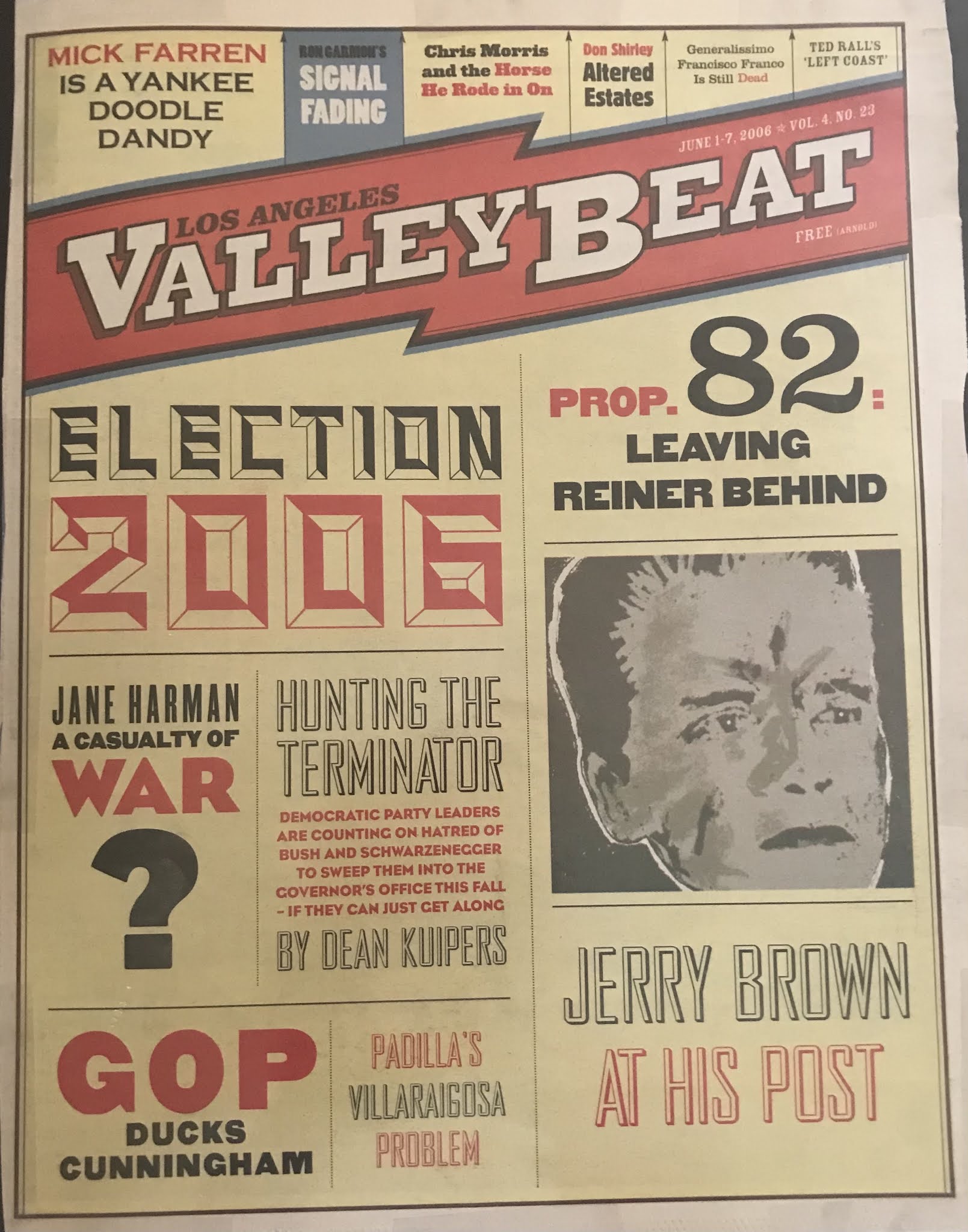
By Justin Chapman and Joe Piasecki, LA CityBeat/ValleyBeat, 6/1/2006

The Democratic primary race for the Glendale-area 29th Congressional District is emblematic of a party in crisis: Popular three-term incumbent Adam Schiff supports the Iraq War and has more than $1 million in campaign funds; Monterey Park peace activist Bob McCloskey, with only $20,000 in his war chest, has little more on hand than a steadfast belief that the war is wrong and the faith that many Democrats agree with him.

Schiff, a former federal prosecutor who in 2000 defeated Republican and Clinton impeachment prosecutor Jim Rogan during the costliest race in House of Representatives history, is a law-and-order -- and anti-terrorism -- kind of guy. In 2001 Schiff cosponsored the House version of the USA Patriot Act and later called for Iraq reconstruction efforts to match the scale of World War II's Marshall Plan, saying military occupation should persist until the new Iraq is politically stable.

A retired union activist, McCloskey is opposed to the Patriot Act and wants the troops out of Iraq right now. "It's time for the Democrats to stand up and have some backbone, to stand up to the Bush administration and call for impeachment," says McCloskey, 55 and a father of three. This is a position that has more in common with Green Party opponent and former Pasadena Mayor Bill Paparian, than with those in control of his own party. And that, he says, is precisely why he is running as a Democrat.

"I want to take the party back," he says.

The state Democratic Party has officially endorsed Schiff, and a lot of his backers are counting on him to cruise to easy victory. Among his major donors are political action committees sponsored by military contractors such as Boeing, General Electric, Parsons Corp., and Raytheon, and media giants such as News America-Fox, the Recording Industry Association of America, Sony Pictures, Time Warner, Yahoo!, Viacom, Microsoft and Disney; financial giants AT&T, Wells Fargo, Bank of America, and Capital One.

Schiff has also found $10,000 in support (half of McCloskey's entire bankroll, including loans to himself) this year from the Blue Dog Political Action Committee, a centrist internal party group. He has not directly challenged McCloskey's assertions, but says he is not an apologist for the Bush administration, and -- like Jane Harman and other congresspersons who have supported the war -- is working to put the breaks on domestic spying by the National Security Agency.

During an April 6 House Judiciary Committee meeting, Schiff asked Attorney General Alberto Gonzalez whether the NSA had been monitoring domestic calls between American citizens.

"The attorney general didn't really give me a direct answer, said he wouldn't rule it out. I think we were all a bit shocked," says Schiff, recounting that hearing. "If they can't rule that out, there's truly no limit to what they can do."

Schiff has since called for security officials to be subpoenaed for congressional hearings, and co-authored the NSA Oversight Act, which would take a position against unwarranted wiretapping and require the Bush administration to disclose wiretapping activities to Congress.

But for McCloskey, that's not far enough. "I've been very disappointed with Schiff's leadership," he says. "How can we expect a congressman who receives campaign money from corporations to use oversight on those corporations? Schiff continues to support the wartime budget, perpetual war in Iraq, and a possible war in Iran. We're passing these costs to our grandchildren. It's not right."

While McCloskey believes filing impeachment proceedings is the only way to see change in Washington, Schiff is reluctant to even publicly consider such a move. "I saw what a terrible ordeal the last impeachment put the country through; I'm not eager to go through that again," said Schiff, who recently moved his wife and two children to a home in a Washington suburb while retaining a part-time residence in Burbank.

Longtime Democrat and peace activist Claire Gorfinkel summed up what many are feeling when she joined McCloskey and local Green Party candidates two weeks ago for a protest outside Schiff's office.

"While he's a good guy," she said of Schiff, "he's wrong about the war and it's important for him to know that members of his community feel strongly that the war needs to end, that the war was wrong from the outset and he was wrong from the outset for supporting it."

McCloskey, Schiff and other candidates participate in a dialogue with the Rev. James Lawson at Scott Methodist Church, 444 N. Orange Grove Blvd., Pasadena, Friday, June 2, 7:30 p.m.


Finally, a fight!

A flood of viable local candidates bring choice to the ballot

By Joe Piasecki, Justin Chapman, and Carl Kozlowski, Pasadena Weekly, 6/1/2006

For years, Pasadena-area Ass-embly and congressional elections have been pretty boring affairs — a foregone conclusion that the incumbent Democrat will cruise to victory with little or no viable opposition.

But this year, it’s different.

Three-term incumbent Democratic Congressman Adam Schiff faces an array of challengers, most notably Monterey Park Democrat Bob McCloskey and former Pasadena Mayor and Green Party candidate Bill Paparian, who are steering debate toward a possible referendum against Schiff’s pro-war and, at times, pro-Bush administration record.

In the race for Assembly, Democratic incumbent Carol Liu has stepped down due to term limits, leaving four Democrats to square off in a hotly contested primary in which, nonetheless, two Green Party candidates have surprisingly set the agenda, like Paparian and McCloskey, around opposition to the war.

Outranked by Democrats by more than 30,000 voters in each race since 2002 redistricting, it appears Republican congressional candidate Bill Bodell and Assembly hopeful Scott Carwile have little to gain — and so the race has emerged not as a battle between liberal and conservative, but as one between left and center.

“It leaves us with lefties who are still being careful [not to offend conservatives] when they don’t need to be,” said Green Party Assembly candidate Philip Koebel, who faces the Green Party’s Ricardo Costa in California’s first competitive primary for a seat on the state Legislature.

Rockin’ the party

That battle is not limited, however, to vociferously anti-war Greens vs. the more status-quo Democrats.

The Democratic primary race for the 29th Congressional District is emblematic of a party in crisis: Schiff supports the Iraq War and has more than $1 million in campaign funds, while McCloskey, with only $20,000 in his war-chest, has comparatively little more on hand than a steadfast belief that the war is wrong.

In 2001 Schiff, who represents Pasadena, Burbank, Glendale and parts of the San Gabriel Valley, cosponsored the House version of the USA PATRIOT Act and later called for Iraq reconstruction efforts to match the scale of World War II’s Marshall Plan, maintaining a position that military occupation should continue until the new Iraq is politically stable.

A retired union activist, McCloskey is opposed to the PATRIOT Act and wants the troops out of Iraq right now.

“It’s time for the Democrats to stand up and have some backbone, to stand up to the Bush administration and call for impeachment,” said McCloskey, 55 and a father of three.

That McCloskey may have more in common with Green Party opponent Paparian — who also supports peace and impeachment and has frequently campaigned alongside McCloskey — than with those in control of his own party is precisely the problem, and precisely why he is running as a Democrat.

“I want to take the party back,” he said.

The Democratic Party’s officially endorsed candidate, there are a lot of people counting on Schiff to nonetheless cruise to victory on Tuesday.

Among major donors are political action committees sponsored by military contractors such as Boeing, General Electric, Parsons Corp. and Raytheon, and media giants such as News America-FOX, the Recording Industry Association of America, Sony Pictures, Time Warner, Yahoo!, Viacom, Microsoft and Disney; and financial giants AT&T, Wells Fargo, Bank of America and Capital One.

Schiff has also found $10,000 in support (half of McCloskey’s entire bankroll, including loans to himself) this year from the Blue Dog Political Action Committee — essentially spelling out his centrist leanings.

But for his part, Schiff has stayed away from directly challenging McCloskey’s assertions but says he is not apologist for the Bush administration, and is working to put the breaks on domestic spying by the National Security Agency.

During an April 6 House Judiciary Committee meeting, Schiff asked Attorney General Alberto Gonzales whether the NSA had been monitoring domestic calls between American citizens

“The attorney general didn’t really give me a direct answer, said he wouldn’t rule it out. I think we were all a bit shocked,” said Schiff, recounting that hearing. “If they can’t rule that out, there’s truly no limit to what they can do.”

Schiff has since called for security officials to be subpoenaed for congressional hearings and co-authored the NSA Oversight Act, which would take a position against unwarranted wiretapping and require the Bush administration to give full disclosure of their wiretapping activities to Congress.

But for McCloskey, that’s not good enough.

“How can we expect a congressman who receives campaign money from corporations to use oversight on those corporations? Schiff continues to support the war-time budget, perpetual war in Iraq … It’s not right,” he said.

Setting the debate

In the race for Pasadena’s 44th Assembly District, Democratic candidates are racing to distinguish themselves from each other as Costa and Koebel contend they are more and more the same — all “soft” on the core progressive issue of out times, the War on Iraq, and all too willing to play politics as usual (see “Behind enemy lines,” page 9).

Despite raising only a few thousand dollars compared to the tens and even hundreds of thousands in the war chests of their Democratic competitors, Koebel and Costa have taken debate on a sharp left turn.

Both have also focused on such progressive issues as increasing affordable housing, establishing living wage increases for the poor, immigrants’ rights, civil liberties and universal health care.

So why are Greens picking up the torch on traditionally progressive Democrat issues?

Costa believes big-money politics have turned candidates ever-closer to the political center.

At best, “We’re running against stealth candidates. They’re progressives, but they have to hide how progressive they are… because ultimately the Democratic Party and its big-name candidates are getting money from corporations. And as progressive Democrats, if you stay stealth too long you wind up being indistinguishable from corporate candidates,” said Costa, a unionized film projector for Laemmle Theatres who, like other Greens, will not accept corporate donations.

When it comes to money, the Democratic frontrunner is former La Cañada City Councilman Anthony Portantino, who has spent nearly $350,000 this year reaching out to voters and still has $140,000 on hand, according to the most recent state reports. He also has more than $72,000 in an account set up by EdVoice, a philanthropic group that includes billionaire Eli Broad and encourages state spending on schools.

Portantino, 45, carries Liu’s endorsement to take over her seat and counts among his financial supporters several unions as well as Raytheon, Clear Channel, California Edison and several movie studios.

Pasadena Planning Commissioner Diana Peterson-More has spent $207,000 on her campaign and still has $137,000 left to spend, but she is on top when it comes to local contributors.

Contributors include developers Mike Balian, Jim Plotkin, Jayleen Mosley, Pacifica Services, Clarence Broussard and Associates and Marilyn Buchanan. Other notables are Glendale state Assemblyman Dario Frommer, Pasadena City Manager Cynthia Kurtz, City Council members Sid Tyler and Chris Holden and former LA City Councilman Nate Holden, School Board member Steve Lizardo, Housing Administrator Greg Robinson, All Saints Rector Emeritus George Regas, Vroman’s Bookstore owner Joel Sheldon, NAACP-Pasadena Area President Joe Brown, former Secretary of Education Shirley Hufstedler and Edwin Jed Fish Gould III (better known as KROQ DJ Jed the Fish). Parsons Corp. gave a healthy $2,500, and the Pasadena Firefighters PAC gave $3,300.

Brian Center, a 38-year-old adviser to the LA County Sherriff’s Department who lives in South Pasadena, has spent $44,000 and had $83,000 on hand at last count. His contributors include Merrick Bobb, who audits Sherriff’s activities for the county, Villa Sorriso owner Jack Huang and the Motion Picture Association of America.

Brian Murray — who has convincingly billed himself as the only true progressive among the four Democrats running — has spent only $27,000, but still had $177,000 left to spend at the state’s last count.

Murray, 36 and a father of two, is an attorney dealing with commercial litigation who teaches economics at East LA College, is president of the anti-discrimination Housing Rights Center and is a founding member of the Center for Progressive Leadership think tank.

His mantra during this campaign: Do more for the area’s poor and disenfranchised.

More choices…

In Glendale, the race for termed-out state Assemblyman Dario Frommer’s seat will ultimately feature Republican Michael Agbaba and Libertarian Steve Myers in the fall, but the first round of the battle will come Tuesday when Glendale City Councilman Frank Quintero and Burbank Board of Education member Paul Krekorian face each other in the Democratic primary.

While Krekorian supports government incentives for alternative energy use, stronger vocational and technical classes in the public schools and strongly opposes term limits, it is Quintero who has snagged the endorsement of Frommer.

“My main issue involves what I’ve done for 28 years of my life and that’s basically education, since I was director of Alliance for Education,” said Quintero. “Secondly, health care coverage, because we need to try to get all Californians insured. Thirdly, the environment and its attendant transportation issues since they go hand-in-hand in Southern California.”

Despite Quintero’s commitment to education issues, EdVoice has set aside more than $100,000 in independent expenditure funds to support Krekorian.

“I’ve helped to lead a school district, and I know from experience what California schools need to provide the best possible education for our children,” said Krekorian.

Reporters Justin Chapman and Carl Kozlowski contributed to this story.