West Pasadena neighborhood associations hear from candidates

District 6, mayoral contenders make their case

By Justin Chapman, Pasadena Now, 1/24/2020, Photos by Brian Biery

[First of two parts] Each of the Pasadena mayoral and District 6 City Council candidates laid out their views on issues facing West Pasadena last night at a forum hosted by three neighborhood associations: the West Pasadena Residents’ Association (WPRA), the Linda Vista-Annandale Association (LVAA) and the Madison Heights Neighborhood Association (MHNA). [Watch the forum here.]

About 200 people attended the forum at Maranatha High School, which was moderated by WPRA treasurer Blaine Cavena along with WPRA Advisory Council members Vince Farhat and this reporter, Justin Chapman.

Mayor Terry Tornek faces three challengers in the March 3, 2020, election: District 5 Councilmember Victor Gordo, former Senior Commissioner Jason Hardin, and businessman Major Williams. In District 6, Councilmember Steve Madison faces two challengers: attorney Tamerlin Godley and nonprofit executive Ryan Bell. At the forum, all seven candidates answered questions on homelessness, development, reclaiming the 710 stub, affordable housing, suicide prevention on the Colorado Street Bridge and more.

The candidates agreed on a number of issues, such as maintaining natural open space in the lower Arroyo Seco. But there were also clear distinctions between the candidates on other issues.

On homelessness and affordable housing

Pasadena, along with the rest of California, is experiencing a housing crisis, which contributes to homelessness and causes families to leave Pasadena, resulting in lower enrollment at Pasadena Unified School District schools and thus school closures.

Godley argued that the city “needs to push the county to fund and scale up existing [homelessness services] programs.”

Hardin said the issue is dear to him because he has experienced homelessness. He said he takes it very seriously and called for the creation of an Affordable Housing Commission.

“Inclusionary housing needs to be strengthened constantly,” he said.

Bell, a tenants’ rights activist, recalled how his landlord in Northwest Pasadena raised his rent by 110 percent, after which he discovered there were hardly any protections for tenants in the city. “I’m a strong advocate for rent control,” he said. “People can’t afford to stay where they are.”

Gordo called for a comprehensive strategy on affordable housing. “We won’t build our way out of this,” he said, adding that housing and homelessness are regional issues. “Pasadena needs to reclaim its seat on the San Gabriel Valley Council of Governments.”

Madison pointed to his strong support of raising the minimum wage and the number of affordable units in the Inclusionary Housing Ordinance to 20 percent. “In addressing the gap between the haves and have nots, it’s important to remember living and fair wages,” he said.

Williams said he’s met with residents and stakeholder groups such as Union Station. “I want to know what services are available and what’s working and what’s not,” he said. “We need to focus on the economics so people can make more and afford housing.”

Tornek pointed out that this is the number one issue people raise when he goes door to door. “Pasadena is one of two cities in San Gabriel Valley that experienced a decline in homelessness,” he said. “But we have a long way to go; on any given night there are 300 people sleeping on the streets, which is just not acceptable. We have to preserve existing affordable housing and make use of city land.”

On local zoning control

In the last couple of years, in an effort to address the housing crisis, the state has passed laws that constrain the ability of local cities to set their own land use policies.

Hardin said he was in favor of Accessory Dwelling Units (ADUs) as a way to help generate much needed housing.

“I understand people have concerns with protecting single family homes. These adjustments won’t demolish those neighborhoods but will create an incentive to create affordable housing. We should comply and increase our stock in affordable housing.”

Bell said local control is ideal, but that the city doesn’t operate in a vacuum. “Pasadena hasn’t been the worst at this but a lot of cities haven’t done what they can and should do to create housing opportunities for people in need and the middle class,” he said. “I would not be in favor of litigation. That money should go towards building affordable housing. The panic over ADUs is overblown. Not everyone will build an ADU, and those who do will help alleviate the shortage of housing.”

Gordo stressed that the city shouldn’t let anyone take away its local control, especially when Pasadena is doing its part in regards to affordable housing. “The state is penalizing the city and its residents for what other cities haven’t done,” he said. “It’s already affecting the fabric of our city. It’s very real and we need to push back. This one-size-fits-all approach the state is taking is wrong.”

Madison argued that since the state forced the city to lift its moratorium on ADUs, there hasn’t been a flood of new ADUs built. However, he added that “we have to have local zoning control.”

Williams said he supports ADUs but would like to revisit the issue in two years to evaluate the impact they’re having. “We need to create opportunities for people,” he said. “Some [zoning and housing related] decisions have been detrimental to lots of communities in the city.”

Tornek said he raised the idea of suing the state over these state-imposed restrictions in his State of the City address last year, but has since become persuaded that that’s not the most effective response. “I don’t want Pasadena to be put in the bucket of being ‘housing resistant,’” he said. “We need to lead by example by working to modify the legislation and I’ve already begun those discussions.”

Godley argued that ADUs will create congestion and parking issues. “We need to think creatively [about housing],” she said, citing examples such as renting-to-own, subsidies, and artist collectives.

On suicide prevention on the Colorado Street Bridge

The city recently hired architects to design suicide prevention barriers for the Colorado Street Bridge and presented several designs.

Gordo said the city should do everything it can to prevent suicides. “That includes better mental health programs and making sure the county does its part,” he said. “We should look at all alternatives.”

Madison pointed out that a new community lives below the bridge and said he supported the city manager’s decision to install temporary barriers. “I do support some [physical] solution,” he said. “We have a consultant studying it now and we will have public meetings starting in February. I’m confident we can come up with a solution.”

Williams also supported temporary barriers but argued that city resources should be going to affordable housing and homelessness, rather than consultants. “I think more pressing issues in terms of resources and funds should solely be focused on affordable housing and homelessness,” he said.

Tornek agreed that the temporary fencing was appropriate. “We can’t tolerate our iconic bridge being identified as the go-to location for suicide in the region,” he said. “We have to be honest: no matter what physical barrier is installed, it won’t be an aesthetically pleasing item compared to how it looked before the fencing.”

Godley said she’s glad the consultants have been hired to study the issue. “We need to look at what mental health services the county will provide,” she said. “We need to have a good relationship with the county.”

Hardin called for adding artwork and murals to the bridge as a way of changing the minds of those attempting to take their own lives. “If we just change the structure of it, they’ll just find another bridge,” he said. “Also, it will be expensive to maintain any physical barrier. Instead, we can do a one-time redecoration of the bridge to pay tribute to those who lost their lives there.”

Bell said he’d rather affect the visual image of the bridge than have it remain known nationwide as a place where people commit suicide. “We need to do everything we can to address the other issues, such as the sense of despair in this economy.”


Exploring the Threats and Opportunities of Cyber Diplomacy at PolicyWest 

Cybersecurity, the digital revolution, and the evolving roles of Silicon Valley and the U.S. government in national security and technology were all major and recurring themes at PolicyWest, Justin Chapman wrote in USC’s Public Diplomacy Magazine.

By Justin Chapman, Pacific Council on International Policy, 12/24/3019

As the world undergoes the Fourth Industrial Revolution, foreign governments and publics are becoming intertwined and interdependent like never before. What does this mean for diplomacy and international relations going forward? What role can public diplomacy play in this evolving dynamic?

Klaus Schwab, founder and executive chairman of the World Economic Forum, first introduced the term “Fourth Industrial Revolution” in a Foreign Affairs article in December 2015. While the Third Industrial Revolution encompasses the digital revolution, the Fourth Industrial Revolution is characterized by “a fusion of technologies that is blurring the lines between the physical, digital, and biological spheres,” Schwab wrote.

Those disruptive technologies include the internet of things, virtual and augmented reality, artificial intelligence, robotics, autonomous vehicles, 3-D printing, nanotechnology, biotechnology, energy storage, and quantum computing, among others.

Cybersecurity, the digital revolution, and the evolving roles of Silicon Valley and the U.S. government in national security and technology were all major and recurring themes at the Pacific Council on International Policy’s annual global affairs conference, PolicyWest.

Cybersecurity, the digital revolution, and the evolving roles of Silicon Valley and the U.S. government in national security and technology were all major and recurring themes at the Pacific Council on International Policy’s annual global affairs conference, PolicyWest. The event was held on October 4, 2019, in Beverly Hills, California, and featured a keynote discussion on Ukraine, a debate on defense spending, and several panels of experts discussing the most pressing global issues of our time.

Glenn Gerstell, general counsel for the National Security Agency (NSA) and Central Security Service (CSS), delivered a TED-style talk on the Fourth Industrial Revolution. He implored the private sector to work with the U.S. government to help confront the growing cyber threats from the United States’ adversaries.

“Is there a danger that we will underestimate and thus not be prepared for the impact of technology? This is an unacceptable risk in the area of national security,” he said. “The digital revolution will present many benefits in the way we work, communicate with friends and family, shop, and travel. But it also presents risks and threats to the fundamental duty of government: to keep us safe and secure. We must be able to understand and stay ahead of the technological progress of our adversaries, whether they’re other countries, terrorists, or common criminals. This is not an area where we can play catch up.”

The cyber world exploits a unique gap in responsibility, and that that responsibility as well as technological capability is shifting from government to the private sector.

He said technological development is going to alter the balance between the private sector and the federal government in terms of responsibilities and capabilities relevant to national security. This is not just a domestic issue, considering the seemingly unstoppable influence of multinational corporations. Gerstell argued that the private sector has more data, increasingly more social responsibilities, and is directly exposed to the threat posed by a rising China.

“For the first time since the United States became a global power, it must now confront an adversary that presents not just a political or military threat, but also a fundamentally economic one,” he said. “But in this economic area, the playing field is not even. It’s our private sector that will bear the brunt of the effects of a cohesive, competitive China.”

He also argued that the cyber world exploits a unique gap in responsibility, and that that responsibility as well as technological capability is shifting from government to the private sector.

In the 20th century, he pointed out, “it was government that led the way in technological development and had the expertise, and it was often the private sector that was trying to learn from it and catch up with government. Now, in many critical areas, that’s exactly switched 180 degrees and we see that it’s the private sector that has a much greater level of technical capability, is spending billions of dollars on research and development, and has the expertise in key areas.”

The United States cannot confront the likes of China and Russia—who are quickly gaining ground in terms of cyber capabilities—on its own.

He posed the question: How must we adapt to this altered balance to achieve our goal of national security?

He called for the “melding together of the relative strengths and positions of the two sectors. Perhaps the best way to do that is through new or deeper public-private partnerships in figuring out how to handle data, collaborating to combat cyber malevolence, and confronting China in an integrated way.”

The only way that is possible is if the U.S. government articulates a consistent policy regarding China and communicates that policy to its allies and their publics around the world. Like previous growing adversaries, the United States cannot confront the likes of China and Russia—who are quickly gaining ground in terms of cyber capabilities—on its own. It needs to win the hearts and minds of Europeans, Africans, South Americans, and Central, South, and Southeast Asians, to name a few major players in this sphere. In other words, it needs to change course.

In a disheartening and potentially dangerous trend, the Trump administration has been dismantling existing cybersecurity protections put into place by the Obama administration. According to a recent Axios article, “at least a dozen top or high-level [White House] officials have resigned or been pushed out of a cybersecurity mission that was established under Barack Obama to protect the White House from Russian hacking and other threats.”

As American democracy falters, so too does the image of the United States in the eyes of the world, making the job of the public diplomat that much more difficult and elusive.

Not to mention the cybersecurity threats to our elections, only increasing and becoming more sophisticated as we round the bend to 2020.

The Trump administration has done virtually nothing to prevent another intrusion into our elections by Russia or anyone else. As American democracy falters, so too does the image of the United States in the eyes of the world, making the job of the public diplomat that much more difficult and elusive.

At PolicyWest, Antonio Mugica, CEO of Smartmatic, a company that specializes in technology solutions for electronic voting systems, said our society’s failure to catch up with election technology is “shameful” and has “caused a lot of confusion.”

He suggested the United States learn from the small Baltic nation of Estonia, which doubled down on and strengthened financial and election security through technology after a devastating cyber-attack from neighboring Russia in 2007.

There are countless tools for today’s public diplomats to utilize in cyberspace in order to articulate U.S. foreign policy objectives to international audiences, strengthen relationships between the American people and publics around the world, and exchange and celebrate diverse cultures.

During a panel at PolicyWest on the intersection of Silicon Valley and national security, Sarah Sewall, executive vice president of policy at In-Q-Tel, a not-for-profit venture capital firm, said the questions we are facing today about technology combine “the hard security pieces with the human rights and values pieces.”

“When we think about the changing nature of power, what undergirds the United States’ ability to be a leading power in the globe and a force for good, we’re seeing a shift in the sources of that power toward technology,” she continued. “Technology is becoming the currency in which power is accrued and exercised. Who is going to be the most innovative and advanced in not just thinking about AI but adopting and using and implementing AI?

Who’s going to own the biotech revolution, which has the ability to transform everything? Some of the United States’ adversaries have the view that this is the race for global leadership and power.”

Public diplomats have unprecedented opportunities to reach a virtually limitless audience around the world. But they also need to stay vigilant against the threats posed by technology.

Because of these advances in technology, public diplomats have unprecedented opportunities to reach a virtually limitless audience around the world. But they also need to stay vigilant against the threats posed by technology: facial recognition, deep-fakes, lifelike online bots, machine learning, and automated microtargeting, to name a few, all have unprecedented pros and terrifying cons.

And they also shouldn’t forget the lessons of the past. There are some foundational elements of public diplomacy that reliably work no matter the medium, such as listening and approaching cultural relations in a cooperative, rather than self-interested, manner. The long-lasting impact and reach of soft power should not be underestimated.

There are countless tools for today’s public diplomats to utilize in cyberspace in order to articulate U.S. foreign policy objectives to international audiences, strengthen relationships between the American people and publics around the world, and exchange and celebrate diverse cultures. Virtual exchanges, digital broadcasting, and e-sports—in addition to social media and multimedia—are all areas that have a lot of potential for achieving public diplomacy objectives.

The U.S. government must make its own cybersecurity and that of the private sector—as well as U.S. allies—a top priority again. If the tenor of the discussions at PolicyWest are any indication, we’re not there yet.

But first, the U.S. government must make its own cybersecurity and that of the private sector—as well as U.S. allies—a top priority again.

If the tenor of the discussions at PolicyWest are any indication, we’re not there yet.

__________________

Justin Chapman is the Communications Officer at the Pacific Council on International Policy.

This article was originally published in the winter 2019 issue of USC’s Public Diplomacy Magazine.

Learn more about PolicyWest 2019; watch the keynote discussion on Ukraine and TED-style talks on LA and international trade, election security, climate change, and the Fourth Industrial Revolution; and read a summary of the debate on defense spendingcybersecurity discussions, and other insights. Check out more photos from the conference on our Flickr page.

The views and opinions expressed in the pieces above are those of the author and speakers and do not necessarily reflect the official policy or position of the Pacific Council.


DECEMBER 5, 2019
By: Marissa Moran Gantman  Justin Chapman, Pacific Council

This fall, the Pacific Council continued its collaboration with the USC Annenberg School of Communication and Journalism. For a second year, we teamed up with Philip Seib, a long-time Pacific Council member and renowned faculty member at Annenberg, for a graduate-level class on foreign reporting.

The class engaged 10 graduate students—most of them in the M.S. Journalism program—to think critically about covering international issues in a city like Los Angeles. The students dove into stories about growing anti-Semitism in CaliforniaSaudi Arabia's modernization, the Venezuelan diaspora in Los Angeles, and more.

They also had access to Pacific Council events, including our annual PolicyWest conference, and covered the issues discussed and debated by experts. Throughout the semester, we connected the students with Pacific Council members and speakers, who served as sources in their work. At the end of the semester, members Jessica Yellin and Karen Richardson met with the students in our offices to discuss their careers in journalism and government public affairs respectively.

“The Pacific Council tackles challenging issues, and for USC’s aspiring journalists these are the issues they need to understand. The Pacific Council provides invaluable access to experienced foreign policy experts,  and the students benefit greatly from this.”

Philip Seib, USC Annenberg Professor

Throughout the semester, the Pacific Council published the students’ work in our Newsroom, our online platform featuring daily commentary, analysis, and news about international affairs and policy. Below you can find a complete list of articles written by the students this semester.

“The Pacific Council is proud to partner with USC Annenberg Professor Phil Seib and his foreign reporting students as part of our mission to support the next generation of global leaders. Their commitment to covering the most important issues affecting our world will influence the future direction of our international policy.”

Jerrold Green, Pacific Council President and CEO

Read all stories by the USC students here:

Venezuelan Immigrant Goes from Actor to Activist – Abhinanda Bhattacharyya

Myanmar’s Rohingya Face Diplomatic Obstacles – Jackson Stephens

A Brexit by Any Other Name – Paige Smith

Saudi Arabia’s Modernization – Paige Smith and Homoud al Homoud

Millions Protested Climate Change in September. What’s Next? – Abhinanda Bhattacharyya

EU Expansion Unlikely in the Near Future After Summit – Jackson Stephens

The Risky Business of Telling Stories – Abhinanda Bhattacharyya

Growing Anti-Semitism in California and Globally – Sarah Brown

Exploring U.S.-Chinese Economic Diplomacy – Yixin Zhou

Dispatch from Ukraine: On the Frontline of the Info War – Philip Seib

__________________

Marissa Moran is the Chief Communications Officer at the Pacific Council on International Policy.

Justin Chapman is the Communications Officer at the Pacific Council on International Policy.

Read about last year's collaboration with Professor Seib's foreign reporting class.

The views and opinions expressed in the pieces above are those of the authors and do not necessarily reflect the official policy or position of the Pacific Council.


Affordable Housing, Public Schools Crises Dominate First Candidates Forum of Pasadena’s 2020 Election Season

By Justin Chapman, Pasadena Now, 11/22/2019

Nearly all of the candidates running for mayor of Pasadena and City Council districts 1, 2, 4 and 6 in the March 3 election spoke about housing and education issues during a candidates’ forum last night kicking off Pasadena’s 2020 election season.

The forum was hosted by Democrats of Pasadena Foothills, which will vote to endorse candidates at its Jan. 16 meeting, though citywide elected offices themselves are nonpartisan.

Note to Readers: Last night’s event, billed as a “candidates forum” and hosted by the Democrats of Pasadena Foothills (DPF), was actually open only to candidates who are registered Democrats, DPF President Tina Fredericks said Friday. To clarify, that is why some candidates did not speak at the forum.

Not all of the candidates who have pulled nomination papers from the city clerk’s office participated in the forum. None of the candidates running for District 1 spoke at the forum, including incumbent Councilmember Tyron Hampton, Anthony Montiel and Darrell Nash.

In District 2, where Councilmember Margaret McAustin is not running for reelection, only Tricia Keane and Felicia Williams spoke at the forum, while Alex Heiman, Kevin Litwin and Boghos Patatian did not.

In District 4, only Joe Baghdadlian and Charlotte Brand spoke at the forum, while Kevin Wheeler and incumbent Councilmember Gene Masuda did not.

In District 6, incumbent Councilmember Steve Madison, Tamerlin Godley and Ryan Bell spoke at the forum, while William Declercq and Mark Hannah did not.

For mayor, incumbent Mayor Terry Tornek and current District 5 Councilmember Victor Gordo spoke at the forum, while Jason Hardin, Major Williams and Michael Geragos did not.

According to the city’s clerk office, as of 3:03 p.m. on Nov. 20, no candidate had yet filed their completed nomination papers. The deadline to do so is Dec. 6 at 5 p.m.

During the forum, each candidate spoke to the crowd of about 50 people for five minutes. Common themes included housing, homelessness, overdevelopment, the environment, education, and transportation.

Keane, who serves as the deputy director of the city of LA’s Department of City Planning, said solving homelessness and ensuring Pasadena steps up its commitment on water conservation will be among the main issues she focuses on.

“We are at a critical point in Pasadena,” Keane said. “We are facing very real challenges around housing affordability, homelessness and making sure we are planning for a sustainable and equitable future. We need to and we can solve all of these issues. I’ve spent the last 12 years of my career doing just this kind of work, and I’m particularly qualified to get the work done. Our challenge is to figure out how to preserve the Pasadena we know and love.”

Williams, who consults with cities on financing bonds for big projects and serves on the city’s Planning Commission, said the three issues she’s focusing on are affordable housing, homelessness and the environment.

“We’re getting a lot of new development in Pasadena, but it’s not what we need or want,” she said. “We’re getting luxury hotels and luxury housing. That’s displacing residents and making the city unaffordable. I would like to amend the zoning code to push for more affordable housing. We also need some form of rent stabilization and community benefits agreements. Our high cost of housing is pushing people into homelessness. I am running to use my professional experience and my experience in the community to fight for Democratic values on our City Council.”

Baghdadlian, who immigrated to the United States in 1973, said it’s not right that public schools are closing and small businesses are suffering in Pasadena. He made the case that he brings his experience as a business owner to the table.

“Our existing City Councilman is not doing much,” he said. “I am ready to go on this journey and beat my opponent because I believe in doing everything the right way for our city, not ignoring the residents. I will take every issue seriously. My wife and I love to serve the community. It is in me.”

Bland, who serves on the city’s Commission on the Status of Women, said her main campaign issue is environmental justice. She said she suspected that the Edison wires on an easement near her street in east Pasadena was making people sick and possibly giving them cancer. She said that she asked her City Councilmember for an environmental health study but received no response.

“Twelve people on my street are stricken with cancer,” she said. “I’m here to hold the City of Pasadena responsible and accountable to our neighbors and citizens. As a council person, I’ll make sure that our voices are heard and that we’ll have a clean environment in which to live.”

Bell, a nonprofit executive and member of the Pasadena Tenants’ Union, said Pasadena is not working for everyone and that the desperate needs of residents are falling on deaf ears at City Council meetings.

“We need rent control in Pasadena and more permanently affordable housing,” he said. “Gentrification is pushing families out of the city they’ve lived in for generations, corporate landlords are buying up properties and evicting everyone in the building or jacking up the rent and even so-called affordable housing isn’t affordable. Long-established communities of color are being priced out. Schools are closing because enrollment is down because families can’t afford to live in Pasadena anymore. This city needs leadership. Putting out fires as they emerge and erupt is not good enough.”

Godley, who practices entertainment litigation and served on the South Pasadena school board from 2001 to 2005, said education is one of her main passions.

“I’ve been on the Pasadena Educational Foundation board for the last 10 years, raising money for the schools here,” she said. “I know a lot about the schools and have good relationships with the school board, the administration and the personnel of the district. Twenty years is enough for our sitting council person; it’s time for a woman on our City Council for District 6.”

Madison said he wants to make sure every child in Pasadena has the same opportunity to succeed that he had.

“I’m extremely proud of what we have been able to accomplish so far,” he said. “We’ve undergone a renaissance in Pasadena during the time that I’ve been on City Council. We’ve rebuilt City Hall, the Rose Bowl and the Civic Auditorium. We opened a new park at Desiderio and sited nine Habitat for Humanity homes there. But many challenges remain. We have the 710 freeway stump in my district, which presents an opportunity to redevelop 50 acres. I intend to make sure we have a mix of use there, including affordable housing.”

Gordo, the only sitting councilmember to challenge Tornek for mayor, said he intends to focus on housing, education, jobs, fiscal responsibility, public safety and quality of life issues such as overdevelopment and traffic.

“I want to put the people of Pasadena first,” he said. “Pasadena is the center of the universe because of people, because it’s an inclusive city. Its values are consistent with the place that we want to be. But the Pasadena we see evolving today is not the Pasadena I envisioned and experienced as a young kid. I’m going to ensure that Pasadena’s local government is responsive to every part of this city. The mayor needs to have his or her finger on the pulse on every neighborhood of this city, and I intend to do that as your mayor.”

Tornek, who was elected mayor in 2015 and served on City Council and as the city’s planning director before that, said the city is in better financial shape than when he first took office.

“We’ve built our rainy-day fund to pre-recession levels,” he said. “We’ve done a good job in managing workforce without cutting services. People expect a high level of service in Pasadena and they deserve it. I came up with the idea for Measure J to increase our sales tax, which will send an additional $7 million to the school district. But we have a lot more to do. We have some long-term projects that I would really like to continue my work on, including the Arroyo Seco and environmental issues. I hope you will help me in terms of continuing my efforts over the next four years as mayor of Pasadena.”

Ireland Opens Consulate in LA as Part of ‘Global Ireland’

Orla Keane, consul general at Ireland’s brand new consulate in Los Angeles, discusses her new role, Ireland’s plans for the LA consulate, Ireland’s global goals, Ireland Week, Brexit, and more

By Justin Chapman, Pacific Council on International Policy, 11/1/2019

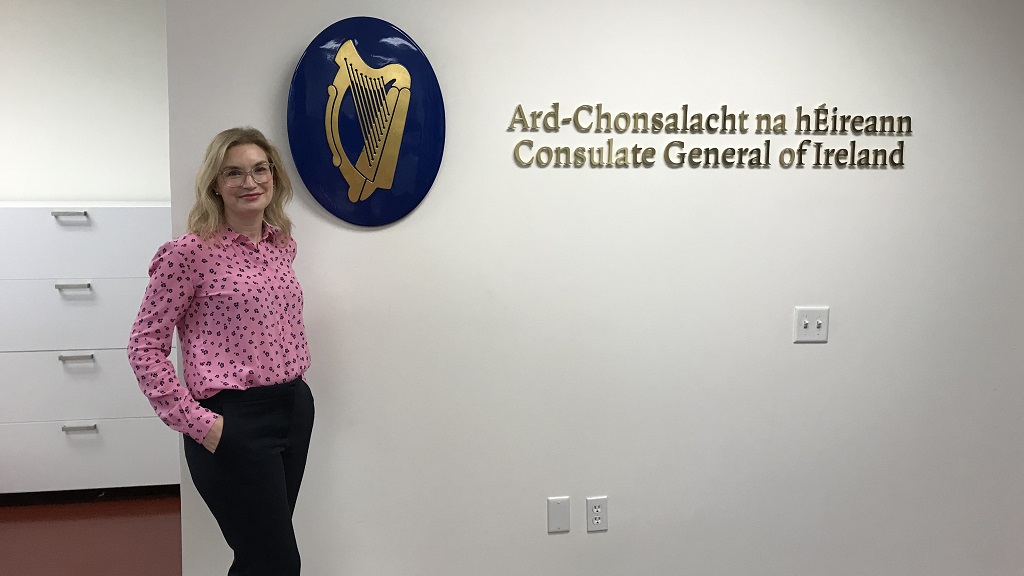
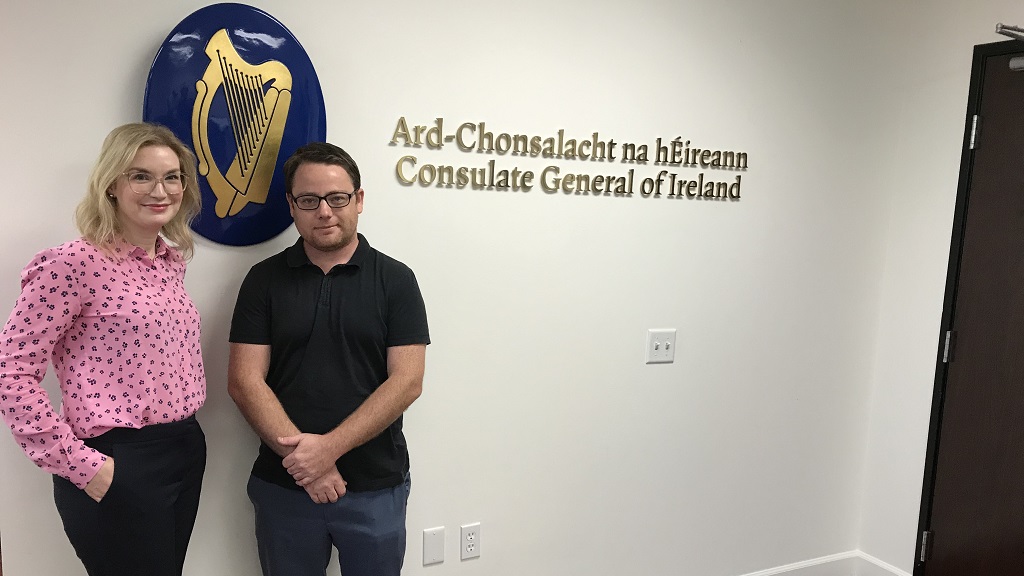
In September, Ireland opened a new consulate in Los Angeles and installed Orla Keane as consul general.

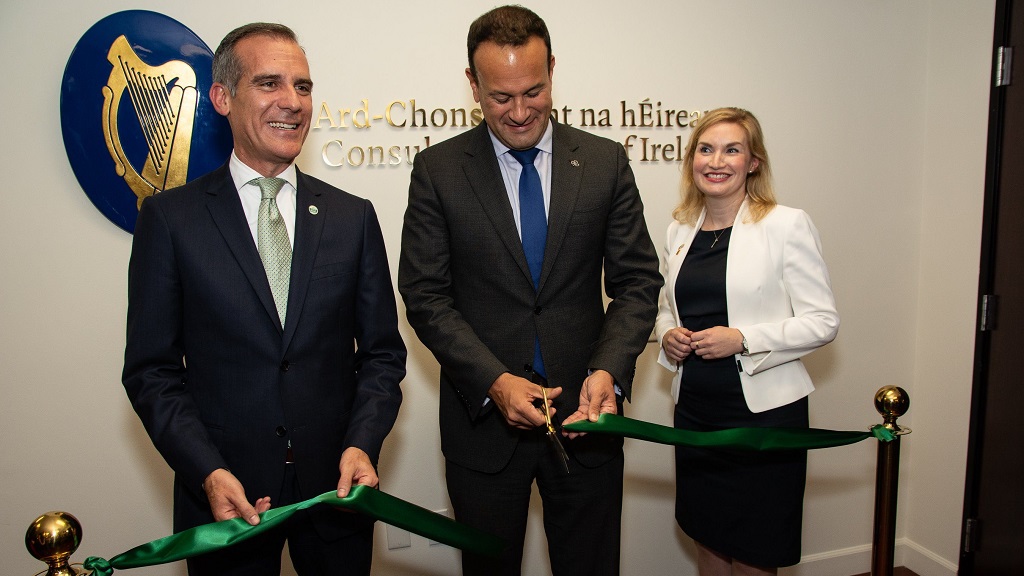
Leo Varadkar, the Taoiseach of Ireland (prime minister, pronounced tee-shock), visited LA and officially opened the consulate on September 26 alongside LA Mayor Eric Garcetti.

"LA has a global reputation for turning today’s ideas into tomorrow’s innovations. That’s one of the reasons we want to expand our presence in California."

Leo Varadkar

Today, a week of events celebrating Irish culture, known as Ireland Week, kicks off across Los Angeles. Now in its third year, Ireland Week includes performances and talks on Irish music, theater, visual art, film, TV, sports, animation, technology, trade, and more.

Pacific Council Communications Officer Justin Chapman recently sat down with Orla Keane at the new consulate to discuss her new role, Ireland’s plans for the LA consulate, Ireland’s global goals, Ireland Week, Brexit, and more.

____________________

Justin Chapman: Tell me about your background and how you came to be the new Irish consul general in Los Angeles.

Orla Keane: I have been in the Department of Foreign Affairs and Trade (DFA) of Ireland—which is the equivalent of the State Department—for over 17 years, so I’m a career diplomat. I’ve done lots of different jobs over the years including previous foreign postings at our office to the United Nations in Geneva, Switzerland, and my last posting was at our Permanent Representation to the European Union in Brussels, Belgium. I’ve done quite a bit of multilateral work.

"There’s a lot going on in Los Angeles, so this was an obvious place for us to open a consulate. It makes sense for us to be here."

Orla Keane

I was also the deputy director of our human rights unit for four years. I’ve worked on our development aid program. I was deputy director for southern Africa for a while. I’ve also worked on issues relating to Northern Ireland and the peace process on a number of occasions.

Tell me about your work in Africa.

Our overseas development aid program is focused on sub-Saharan Africa. By our standards, we have quite a large presence there. I was working on the southern Africa desk. I was lucky enough to visit all of the countries where we have programs there. We have an embassy in Pretoria, South Africa, which also covers Zimbabwe, in Lusaka, Zambia, in Maputo, Mozambique, in Lilongwe, Malawi. We also have a presence in Uganda, Tanzania, Ethiopia, Sierra Leone, and others.

What was your role at the EU-UK unit?

For the last two years before I came out to Los Angeles I was working on Brexit. I was on the relatively small team of diplomats in the DFA who were following pretty much everything to do with Brexit, such as the Article 50 negotiations.

That included working closely with [the EU’s chief Brexit negotiator] Michel Barnier and his team; liaising with colleagues around Europe on information that was coming in on the positions that different member states were taking; and working very closely with our colleagues in our embassy in London who were letting us know about the twists and turns and anticipating all of that, and with other colleagues who were working on Northern Ireland issues because that’s obviously a big priority for us in the Brexit negotiations.

I thought I was coming over here and stepping away from Brexit but it’s kind of hard to get away from it. It’s been a really big priority for the government. Even though it’s not a project that we are supportive of or a project that we think is going to yield any positive results, unfortunately—the Irish government has always been very clear about that—it is nonetheless something that demands our attention. We’re in interesting times today.

Is Ireland worried about how Brexit is going to turn out?

Since about November of last year when the deal between Theresa May and the EU was agreed on, there’s been a lot of uncertainty. That’s probably been the biggest concern for all of us, because we have been and are still working towards a negotiated outcome which would give us an orderly UK withdrawal. That’s what Ireland wants to see, what the EU wants to see, and what the UK wants to see, but because of the composition of the UK Parliament at the moment, because of the strong feelings on every side of the argument, for and against, we’re seeing more and more uncertainty.

"The Irish government has a program called Global Ireland that aims to double our global footprint by 2025."

Orla Keane

The EU has offered a three-month extension of the Article 50 process, and [a general election in the UK has been set for December 12]. Our position is that we support the most recent deal that was done between the EU and the UK and we would like to see that go through. There have been some positive signs from the UK Parliament about that, but still not over the line, so it looks like we’re going into another period of uncertainty.

Our biggest concern was a no-deal Brexit. That’s kind of the worst case scenario because it just puts everyone into very unprecedented uncertainty. At the moment, with the offer of the extension and with the UK Parliament having voted against no-deal, avoiding that scenario is looking a little bit more positive at the moment.

With the majority of Northern Ireland having voted to remain in the EU, do you think there will be a renewed push to reunify Ireland?

It’s certainly an issue that has moved again to the forefront. That discussion has definitely been accelerated by Brexit. It’s a very complex situation. It’s always been a very complex situation. I suppose it’s been made even more complex now by the fact that the majority of the people in Northern Ireland voted against Brexit. There isn’t good support in Northern Ireland for Brexit still, according to opinion polls and certainly from what we hear on the ground.

The uncertainty that the Brexit discussion causes combined with the fact that the Northern Ireland executive hasn’t been sitting for a protracted period, it has surfaced that united Ireland question again. We’re very conscious of that and the government is very conscious of being sensitive to how sensitive an issue that is in Northern Ireland, and also always looking down the line at what we can do to prepare that debate and discussion to anticipate when that question could be asked.

"The consulate in LA is Ireland’s seventh consulate in the United States. California accounts for about 15 percent of all the U.S. imports into Ireland. There are 2.5 million people in California who claim to have Irish descent."

Orla Keane

There are provisions in the Good Friday Agreement that set the parameters around when that question can be asked. Certainly, the Good Friday Agreement is clear that a decision on the united Ireland question could only be made as a result of a referendum that all of the people of Northern Ireland take part in.

So, yes, Brexit has accelerated that discussion and Brexit also raises questions about the union of states in the United Kingdom. That’s another reason that the discussion has been accelerated in Northern Ireland and on the island of Ireland as a whole.

Why did Ireland open a consulate in LA?

We first established a consulate in California in 1933, in San Francisco, so we’ve taken our time in looking at a second consulate in the state. But in fact, California’s the only state where we have a second consulate now, which is very much an indication of the importance of California to Ireland and particularly to the Irish economy and the links that we have here that go back a very long time.

The overall context is that the Irish government has a program called Global Ireland that aims to double our global footprint by 2025. That includes the number of diplomatic missions that we have worldwide. The consulate in LA opened in September, our colleagues in Frankfurt, Germany, opened a consulate in October, and our colleagues in Cardiff, Wales, opened a consulate a few weeks ago. There are now 10 new diplomatic missions opened up under Global Ireland, so we now have 100 diplomatic missions worldwide. For a country of our size, that’s a very significant increase in a short period of time.

Doubling our global footprint also means increasing our state agency presence around the world. It also means increasing numbers in certain key embassies, so for example we’ve put more people into our European Union embassies.

The consulate in LA is Ireland’s seventh consulate in the United States. That’s in addition to the embassy in Washington, D.C., so we have eight diplomatic offices in the United States. That’s really significant if you look at where we are worldwide, and that’s one of the most significant presences that we have.

The United States is a really important trading partner for Ireland. California accounts for about 15 percent of all the U.S. imports into Ireland. One of the interesting things about trade between California and Ireland is that it’s very much two-ways. I read a recent report that the LA World Trade Center did about foreign direct investment in Southern California, and we’re the seventh largest investor into Southern California and Irish companies are employing just over 16,500 people in the region.

That’s the trade and investment piece. And then, obviously there’s our people. California has the largest number of people claiming to be of Irish descent than any other state in the United States. According to the last Census, there are 2.5 million people in California who claim to have Irish descent, which is about 8 percent of the overall population.

"Ireland Week [from November 1-8] is a really great showcase of Irish culture, from comedy to theater to literature and a lot in between, including an emphasis on technology and innovation and the nexus of business and culture."

Orla Keane

We’re also expanding our presence on the West Coast in general. For a long time, San Francisco was the only consulate on the North American West Coast. We recently opened a consulate in Vancouver, Canada, as well, and going around the corner a little bit we also opened a consulate in Austin, Texas, four years ago.

There’s much more of an awareness at home about what’s happening on the West Coast. Certainly, when it comes to California, there’s so much innovation happening here. The technology that’s developed in California has implications around the world, particularly for us in Ireland. There are a number of really big California-based companies who have a very large presence in Ireland, including all of the main born-on-the-internet companies. European and Middle East headquarters of a lot of those big companies are usually in Dublin: Facebook, Google, and PayPal, for example.

There’s a lot going on, so Los Angeles was an obvious place for us to open a consulate. Certainly, since we’ve been here we can see that there’s so much potential. It makes sense for us to be here.

Does the new LA consulate offer consular services like passports? And do you also plan to conduct public diplomacy and cultural programs?

We’ve opened a slightly smaller office here for the first two years and we’re still in setup mode. We are keeping some of our major consular services such as passports and visas at the San Francisco consulate because a lot of infrastructure and people-hours go into that work. In LA, we’ll provide consular assistance such as emergency travel documents for people who have maybe lost their passport or those who need assistance due to circumstances that have arisen while they’re traveling or while they’re based here. Meanwhile, we’ve moved most of our passport renewals online, which is a game changer for us working in the consulates.

We also have a really big focus on culture. That’s linked to the emphasis we have on the creative sector, the screen and audio/visual industries in particular. It was actually announced during the Taoiseach’s visit in September that Screen Ireland, formerly known as the Irish Film Board, are going to be reestablishing their presence in LA. They’re going to place a person in LA next year who will be co-located with us here at the consulate.

We also work on promoting Irish culture. We had a contemporary art center in Santa Monica this summer as a pilot project, which was fantastic. I’m working on a project this week with an amazing Irish dance company that has a production at UCLA on November 9. That’s all very much part of what we’ll continue to do. There is a lot of interest in Irish culture here in terms of visiting Irish artists, musicians, theater companies, dance companies.

What can we expect at this year's Ireland Week?

Ireland Week is taking place from November 1-8. This is the third year we’ve had Ireland Week in LA, the only city where it takes place. It’s quite an innovative idea. It’s independently organized, but we support it from the consulate. That’s been a really great showcase of Irish culture, from comedy to theater to literature and a lot in between, including an emphasis on technology and innovation and the nexus of business and culture.

The organizers of Ireland Week were looking at how much is going on here. There are a lot of younger, Irish-born people who are out here working for big tech companies and staying on after and setting up their own companies or working in startups. A lot of that technology is also linked to the creative industries as well. And there have always been Irish people working in the creative industries in Hollywood.

_______________________

Justin Chapman is the Communications Officer at the Pacific Council on International Policy.

Learn more about the Irish consulate in LA and its services and programs by following @IrelandinLA on Twitter or visiting dfa.ie/losangeles. Learn more about Ireland Week at irelandweek.com.

The views and opinions expressed here are those of the speaker and do not necessarily reflect the official policy or position of the Pacific Council.