Rhodes: U.S. is Losing Influence, Credibility on World Stage

U.S. influence and credibility on the world stage has been diminished under the Trump administration, Ben Rhodes told students and Pacific Council members at a recent discussion at Pomona College

By Justin Chapman, Pacific Council on International Policy, 5/28/2019

U.S. influence and credibility on the world stage has been diminished under the Trump administration, Ben Rhodes told students and Pacific Council members at a recent discussion at Pomona College.

Rhodes served as deputy national security advisor and speechwriter in the Obama administration from 2009-2017. He is the author of the book The World As It Is: A Memoir of the Obama White House. The discussion was moderated by Mietek BoduszyÅ„ski, Pacific Council member and assistant professor of politics and international relations at Pomona College.

Rhodes said that while a number of incidents since the Cold War have chipped away at that influence and credibility, he sees this trend as less of a decline and more of a reallocation to other countries and regions around the world.

“The Iraq War made a lot of other countries, including many of our allies, feel like U.S. dominance in the world post-Cold War was dangerous,” Rhodes said. “That kicked off efforts to build different blocs of countries to check a totally unbound America. Then most countries saw the financial crisis as the United States’ fault, which was a further blow. Now, what worries other countries is not just that Trump is president, it’s that Americans elected Trump president, someone they see as totally unfit for the most powerful position in the history of the world, someone who could destroy the world a hundred times over. From their perspective, it’s like, ‘How could you all do something this crazy and irresponsible?’”

Rhodes is particularly worried that Trump administration officials are inexperienced and distrustful of traditional foreign policy experts. “We see the outcome every day,” he said.

He added that countries like Japan don’t have nuclear weapons because they trust the United States to be the ones with nuclear weapons. Now that calculus is changing for them as they look to China and others for international agreements and alliances.

“What worries me is that we don’t understand just how big of a hole we’re in,” he said. “It’s not going to change just by getting rid of Trump. We’re going to have to win back trust and credibility over a more extended period of time to push back against the more illiberal, authoritarian models that are being promoted by the Russians and the Chinese. I think we can do that, because no other country wants to play the role of trying to organize the world and solve all these problems. Particularly young people want there to be more equal opportunities around the world, but they need leadership from us and they’re not getting it.”

Rhodes is particularly worried that Trump administration officials are inexperienced and distrustful of traditional foreign policy experts. He described how Obama’s effort to reopen diplomatic ties with Cuba was successful because Rhodes had regional experts such as Ricardo Zuniga advising him through the process. 

“It was that mix of someone who was empowered to change things and someone who really had that institutional knowledge,” Rhodes said. “What is so worrying about someone as green as Jared Kushner is that he’s in this relationship with [Saudi Crown Prince] Mohammed bin Salman [MBS] alone. He’s out there without a net, without expertise. He’s going off on a yacht with MBS, he’s WhatsApping with the guy, and Jared has no Ricardo Zuniga, nobody who’s saying to him, ‘Here’s why MBS is actually getting into this fight with Qatar, here’s why MBS is putting people in prison in the Ritz Carlton, here’s why you shouldn’t tell MBS this secret, and here’s why you shouldn’t have this top secret security clearance because you might tell MBS this secret.’”

"The biggest cost of Trump pulling out of the Paris Agreement, the Iran nuclear deal, the Trans-Pacific Partnership, and others is that it diminishes our capacity to be a credible actor on the world stage over time. If you’re a foreign country, why would you ever make another deal with the United States again?"

Ben Rhodes

Rhodes said the Trump administration is demonstrating what happens when people go into government to change things but who are scornful of expertise. “We see the outcome every day,” he said.

Rhodes’ best moments in government were some of the saddest and most difficult things to write about in his book. As he was writing about the success of the Cuba opening and achieving the Iran deal, Trump was trying to undo those efforts.

“It made me realize the extent to which presidential legacies are not settled things,” he said. “They’re not even settled by Trump, because the next Democratic president will likely put the United States back in the Paris Agreement and reopen to Cuba. But the biggest cost of Trump pulling out of the Paris Agreement, the Iran nuclear deal, the Trans-Pacific Partnership, and others is that it diminishes our capacity to be a credible actor on the world stage over time. If you’re a foreign country, why would you ever make another deal with the United States again? Even if the next Democratic president puts us back in those deals, other countries are not going to sit down at the table with us again because they’re going to think, ‘What happens if another Trump gets elected?’”

The other side of that coin, Rhodes said, is that authoritarian regimes have increasing influence on the United States.

"You can’t overstate the influence the Emiratis and Saudis have over U.S. foreign policy. If a think tank is taking millions of dollars from a Gulf government, and you think that’s not going to impact the views expressed by that think tank, you’re not living in the real world."

Ben Rhodes

“You can’t overstate the influence the Emiratis and Saudis have over U.S. foreign policy,” said Rhodes. “They spend an enormous amount of money in the United States to wire the foreign policy establishment through lobbying and by bankrolling many of the think tanks that are creating the conventional wisdom of what we should be doing with our foreign policy. If a think tank is taking millions of dollars from a Gulf government, and you think that’s not going to impact the views expressed by that think tank, you’re not living in the real world.”

He also described how journalists and former government officials are offered lucrative seats on boards or speaking engagements in the Gulf, or get invited to lavish dinners in Washington.

“At the height of the 2013 Egyptian coup, we knew that the Emiratis and the Saudis were bankrolling that coup, that they were paying for the protests against the Morsi government,” said Rhodes. “They had this disinformation campaign attacking our ambassador, calling her a Muslim Brotherhood stooge. Meanwhile, this is getting no commentary in Washington, and if you want to know why, open up Politico Playbook and read, ‘Last night, Yousef Al Otaiba, the Emirati ambassador, hosted seven prominent media personalities and four congressmen at his home for a dinner cooked by Wolfgang Puck. Great night.’

Rhodes said the United States used to promote democracy around the world through its own example, but now the United States is “exporting authoritarianism through our own example."

“To me,” Rhodes continued, “there is a corruption in this [foreign policy] establishment, and it just so happens coincidentally that many of the positions taken by these establishment organs overlap with the foreign policy interests of the Emiratis and the Saudis, which tend toward confrontation with Iran and military engagement with their adversaries in the region. This has got to be part of the conversation.”

Rhodes argued that the United States used to promote democracy around the world through its own example, which is its most powerful tool. However, now the United States is “exporting authoritarianism through our own example. Trump acting in fundamentally undemocratic ways and violating democratic norms and attacking the free press in this country is a greenlight to every dictator around the world. There’s not a dictator around the world who hasn’t used the phrase ‘fake news’ in the last two years.”

He called for more investment in democracy in the United States, including making sure everyone can vote, celebrating a free press, and abiding by the rule of law.

On the Trans-Pacific Partnership

Rhodes said he was a big believer in the Trans-Pacific Partnership (TPP), despite its flaws.

"Yes, there are huge problems with globalization and free trade agreements, but I don’t think the answer to that is to just tear up the agreements and go home," he said. "The answer is to have better trade agreements. One simple reason why is, if you care about human rights, workers’ rights, and environmental protections, if we’re not doing something like TPP, the Chinese have a different model of trade that cares about none of those things and they will fill that vacuum and they are filling it right now."

He cited Vietnam as an example, a country that had to create workers' rights and civil society participation in order to join TPP, or they would lose market access benefits.

“TPP was this force for liberalization in a closed society," he said. "One Vietnamese official said to me, ‘We’ve hated the Chinese for a thousand years. We’re uncomfortable with the Chinese dominating us, but we know they’re going to be there. We don’t know if the United States is going to be there. Unless we have some agreement with you, then we’re going to have to make a deal with the Chinese.’ An official from another country said because of China’s ‘One Belt One Road’ initiative, which is basically ‘you pay into the Chinese bank and they’ll decide how to spend the money,’ there are no more bids by companies from different countries for construction projects. Now it’s just the Chinese."

He added that trade agreements like the TPP are necessary because they give the United States the opportunity to promote its values abroad.

“Americans, particularly on the left, have to wrestle with this: if our answer to globalization is to pick up our tools and go home, then the rules are going to be written by much more illiberal societies than us," he said. "The answer therefore has to be more progressive trade agreements, because this is going to happen either with us or without us. Maybe TPP was an imperfect vehicle, but something like it is profoundly necessary.”

On Putin

Rhodes said that Putin essentially has a chip on his shoulder when it comes to the United States, at least since he reassumed power in 2012.

“Putin clearly came back to power in 2012 determined to push back," Rhodes said. "He felt that the United States for 20 years had been pushing against Russia, pushing NATO and the EU on the former Soviet Union, and toppling Russian-backed dictators. In meetings with the Obama team, Putin was a master at finding a kernel of truth and then building a pyramid of lies around it. He was right that we had done a lot of these things, but then he would assign the worst motivation to everything we did and he was quite litigious in drawing us into debates. He was searching for justification for fundamentally amoral and self-interested ends.”

On soft power

When Obama visited Vietnam, the two countries signed several agreements, but Rhodes said every Vietnamese person he’s ever talked to about that trip only remembers that an American president sat in a noodle shop and ate the same thing that they eat.

“They felt seen. They felt validated, like an American president cared about them,” he said. “We don’t appreciate how important the appeal of that stuff is. Xi Jinping represents power and wealth, but he doesn’t represent that common humanity and that sense of respect for human dignity, that sense that ‘maybe I can make my community better’ or ‘maybe I should ask for a government that’s more responsive to my aspirations.’ So much of that comes from that type of diplomacy, or foreign exchange programs, or cultural relations. The face we put forward to the world matters a lot. Now we’re losing that.”

"Right now, Trump is doing everything he can to escalate and provoke the Iranians. It almost feels like they want the Iranians to offer them the pretext for a military conflict."

Ben Rhodes

He told the story of when he was in Kenya recently and a diplomat told him that a lot of Kenyan students who traditionally studied in American universities saw Trump’s child separation policy and they thought that would happen to them. They didn’t know the difference between a Central American asylum seeker, they just thought, “America doesn’t welcome foreigners anymore.” Now those Kenyan students are going to study in China.

“You think that’s not going to have an impact? These are people who are going to end up running the government and businesses in Kenya,” said Rhodes. “If you want democracy to deepen in places like Kenya 20 years from now, you don’t want their best and brightest studying in a non-democratic country now. That’s what we’re giving away with this Stephen Miller brand of policy.”

On Iran

Rhodes warned that the Trump administration seems intent on starting a military confrontation with Iran.

“Right now, Trump is doing everything he can to escalate and provoke the Iranians," he said. "It almost feels like they want the Iranians to offer them the pretext for a military conflict. That Trump wants them to start their nuclear program again and stop complying with the deal. War with Iran would be an absolute catastrophe.”

On the spread of rightwing populism around the world

Rhodes said the defining challenge of our time is confronting rightwing populism.

"There’s one narrative that the Putin-Trump-Netanyahu-ErdoÄŸan-Duterte-Bolsonaro characters are telling," he said. "Then there’s the progressive, largely democratic story that not as many people are telling. We know where the authoritarian narrative goes, and not to be alarmist here, but there’s no circumstance in the history of the world in which that has not led to a big war. These are the stakes, and they could not be higher.

He added that he thinks the answer is for progressive activists in the United States to network with progressive activists in other parts of the world.

"The right is coordinated," he said. "They have common financing, political strategies, media platforms. No wonder they’re winning. People need to get organized across borders if they want to push back against this.”

On Syria

Rhodes described Obama’s analysis of the situation in Syria in 2014 when he decided not to launch an attack after the Syrian government crossed his red line and used chemical weapons.

“Obama’s point was, ‘Let’s not kid ourselves that firing a few cruise missiles into Syria is going to cause Bashar al-Assad to stand down. This man is fighting to the death with the support of Russia and Iran,’" he said. "The debate was, do we think we should remove this person from power and essentially be a party to this conflict in Syria, or will that make things worse and get us into a war that the American people have no stomach for after Iraq and Afghanistan?"

"As horrific as the situation in Syria was, I couldn’t ignore the reality that with the best of intentions, military interventions can sometimes fail and make things worse."

Ben Rhodes

Rhodes argued that even with the best of intentions, military interventions can sometimes fail and make things worse.

“We had no experience in the last 20 years of these military interventions working," he said. "I understand the moral argument of intervening because of what Assad is doing. But then we’d be in the middle of this conflict with Russia, Iran, Hezbollah, al Qaeda, ISIS, and Assad. If we took out Assad, the people who took over Syria could have been Hezbollah or al Qaeda."

Rhodes summed up Obama's Syria calculation as this: "'I know, if I’m going to be intellectually and morally honest, that if we go in, the only way we have any shot in trying to land this situation in a better place, is if we’re going to be there for the rest of my presidency, in one way or another.’”

On Afghanistan

Rhodes said that he would have liked to see the United States end its troop presence in Afghanistan during the Obama administration.

"We were heading in that direction, and a number of things made it hard to get that done, including some political dysfunction in Afghanistan and the rise of ISIS," he said. "At the end of the day, if we have as our rationale that we’re not going to leave Afghanistan until the Taliban is completely militarily defeated, we’re going to be there for the rest of your life."

He said bringing the Afghanistan War to an acceptable conclusion will be very difficult, and that he's worried that the Trump administration is not up to the task.

“The future is going to have to be a withdrawal of U.S. troops combined with diplomacy and support for the Afghans that tries to broker something between Pakistan and the Taliban and the Afghan government," he said. "Incredibly complex diplomacy that I unfortunately don’t know that this administration is designed to do. You have to incentivize the actors in the region to accomplish what they want without resorting to violence.”

_______________________

Justin Chapman is the Communications Officer at the Pacific Council on International Policy.

The views and opinions expressed here are those of the speaker and do not necessarily reflect the official policy or position of the Pacific Council.

Irish Border and Trade Are Sticking Points in Brexit Talks

Options are dwindling and time is running out for the United Kingdom to negotiate a deal to leave the European Union, experts told Pacific Council members in a teleconference on Brexit

By Justin Chapman, Pacific Council on International Policy, 4/24/2019

Options are dwindling and time is running out for the United Kingdom to negotiate a deal to leave the European Union, experts told Pacific Council members in a teleconference on Brexit. This discussion took place on April 4, before EU leaders agreed to extend the official leave date from April 12 to October 31.

Speakers on the teleconference included Stephen Booth, director of policy and research at Open Europe, and Dr. Meredith Crowley, university reader in international economics at the University of Cambridge. Dr. David M. Andrews, a Pacific Council member and professor of international relations at Scripps College, moderated the discussion.

Booth explained that negotiations between the UK and the EU consist of two parts. The first is the withdrawal agreement, which is legally binding and contains many elements that are not controversial, such as citizens’ rights. It also includes the so-called “Irish backstop,” which is basically the EU’s unwavering demand that no matter what the final deal looks like, there can be no hard border between Ireland and Northern Ireland. Such a border could result in the dissolution of the Good Friday Agreement and lead back to sectarian violence.

The second part is the political declaration, which is not a formal treaty but rather a list of aspirational dreams and demands on both sides of the negotiating table about what the potential future relationship might look like.

“The EU has always insisted that we can’t negotiate the future relationship until the UK has formally left,” said Booth. “The only way to do that is to conclude the withdrawal agreement on the UK side of the table. Much of what has been going on in Parliament the last couple of weeks has been a debate about that political declaration, in terms of what Members of Parliament (MPs) would like to see in the future, not the withdrawal agreement.”

Two of the options being debated include a customs union or a free trade agreement. The problem is that neither of these options allow the UK to keep the Irish border open and also allow the UK to conduct its own independent trade policy.

Crowley explained that the single market of the EU consists of four areas: free trade and goods, free trade in services, free movement of people, and free movement of capital and investment. The thorniest issue is the UK’s future trade relationship with the EU.

“Prime Minister Theresa May has three objectives she wants to achieve that are mutually incompatible,” said Crowley. “She wants to maintain an open border with Ireland to keep the Good Friday Agreement in place. The Tory government also wants the freedom to create its own trade policy for the UK, and they want to minimize time cost and disruption of moving goods between the UK and the EU.”

Two of the options being debated include a customs union or a free trade agreement. The problem is that neither of these options allow the UK to keep the Irish border open and also allow the UK to conduct its own independent trade policy.

A customs union would allow the Irish border to remain open, but wouldn’t satisfy Brexit hardliners who think that model still gives the EU too much say over its trade regulations, even though it would also restrict the free movement of people as well. A trade agreement would satisfy the trade and movement aspects, but would also require a hard border between Ireland and Northern Ireland, which the EU and most Labour MPs will not accept.

"The EU has said that at the end of the day, the border in Ireland has to stay open and that can only be the case if at some level there is harmonization of regulation between the UK and the EU."

Meredith Crowley

“The EU has said that at the end of the day, the border in Ireland has to stay open and that can only be the case if at some level there is harmonization of regulation between the UK and the EU,” said Crowley.

Crowley added that bilateral trade agreements wouldn’t be as beneficial for the UK as hardline Brexiteers think.

“The hardliners want the UK to have the ability to negotiate its own bilateral trade agreements around the world, because they believe they can get better benefits that way than if they do so within the EU,” said Crowley. “But trade agreements with third country markets will be a mess for the UK. Most third country market partners don’t want to make trade deals with the UK until they know what’s going to happen with the EU.”

One of the reasons that May’s government has not been able to strike a deal is because not only does the Conservative Party and the Labour Party disagree on how to proceed, but there are also factions within each party.

"The only option Theresa May feels she has now is to reach across the aisle to the Labour Party, and if that means a softer Brexit, so be it."

Stephen Booth

“Theresa May has tried and failed to pass the withdrawal agreement with her own party and the Democratic Unionist Party (DUP, of Northern Ireland), which the Conservatives rely on to stay in power,” Booth said. “The DUP wants a harder Brexit, and the main issue with them is the Irish backstop. The only option May feels she has now is to reach across the aisle to the Labour Party, and if that means a softer Brexit, so be it.”

However, it is clear that the Labour Party is also split on this issue, between MPs who would accept a softer Brexit with a permanent customs union or single market membership, and a significant number of MPs who will only support an agreement on the basis that it goes to a second referendum with an option of “Remain” being on the ballot.

“[Labour leader] Jeremy Corbyn faces a tough decision now on whether he allows ‘leave’ to go through, or owns ‘remain,’” said Booth. “It’s unclear what he may decide. If he decides on the soft Brexit route, what impact will that have on his Labor Party?”

The debate about whether or not the UK should leave the EU at all is still very much alive.

One option considered undesirable by all sides is that Parliament is unable to make any deal, resulting in a long, 6-month extension in which no decisions are made. Booth said such an outcome “would be damaging for our politics and increase economic uncertainty which is already having some effect. That’s a risk I certainly would not discount.”

Booth said the debate about whether or not the UK should leave the EU at all is still very much alive. While Parliament has taken the option of leaving without an agreement off the table by strongly voting against that in one of its recent indicative votes, it also rejected holding a confirmatory referendum about whether to actually leave. In fact, the series of indicative votes that Parliament held in recent weeks resulted in no real conclusion.

While the UK wanted a short extension so they could avoid participating in the EU parliamentary elections at the end of May, the EU extended the deadline to October 31, which means the UK does have to take part in the elections unless they ratify the withdrawal agreement in the next month.

Booth predicted that the UK would ask for another extension beyond April 12, and that the EU would agree but only to a long extension, which is what ended up happening. While the UK wanted a short extension so they could avoid participating in the EU parliamentary elections at the end of May, the EU extended the deadline to October 31, which means the UK does have to take part in the elections unless they ratify the withdrawal agreement in the next month.

“The UK government hopes that as a result of cross-party talks with the Labor Party, they can try to conclude an agreement so the UK is able to leave before the EU parliamentary elections,” said Booth. “But the UK Parliament has effectively taken control of the process. When MPs voted on different Brexit outcomes in recent weeks, the government was not involved or bound by that process. But now the government has indicated that it would be willing to oversee and preside over another round of these indicative votes and be bound by that process. That’s plan B if cross-party talks fail and the government can’t agree with Labor.”

_______________________

Justin Chapman is the Communications Officer at the Pacific Council on International Policy.

The views and opinions expressed here are those of the speakers and do not necessarily reflect the official policy or position of the Pacific Council.

Exploring Immigration Policy at the El Paso-Juárez Border

Amid the national debate about immigration and border policy and a recent surge of Central American asylum seekers, Pacific Council delegates traveled to El Paso, Texas, and Ciudad Juárez, Mexico, to gain firsthand experience and knowledge of the situation on the ground

By Justin Chapman, Pacific Council on International Policy, 4/11/2019


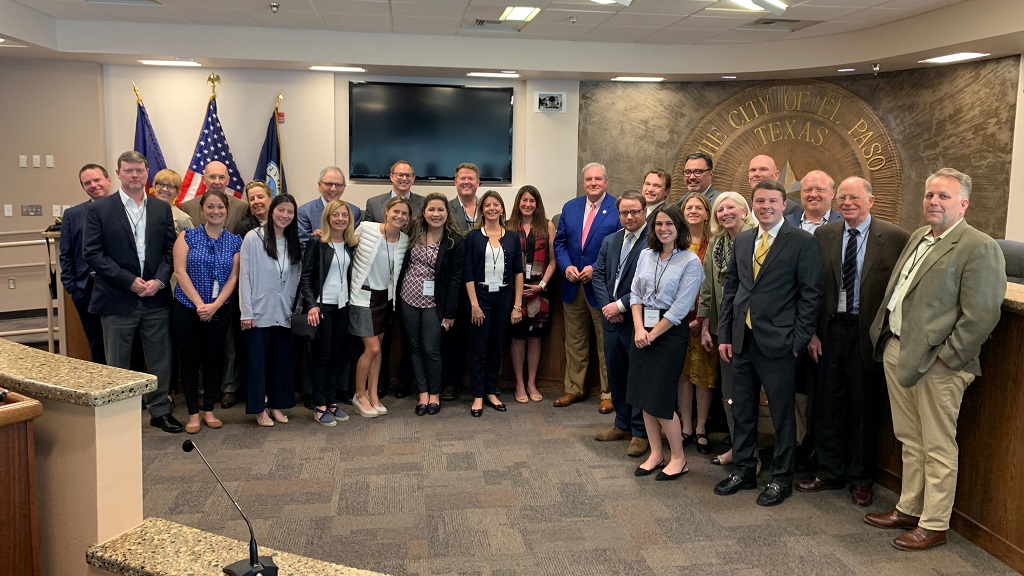
In March 2019, a delegation of Pacific Council members traveled to El Paso, Texas, and Ciudad Juárez, Mexico, as part of the Council’s Mexico Initiative to explore immigration policy and the reality of its implementation on both sides of the border.

This delegation could not have visited the border region at a more relevant or opportune time. Each day of the visit, immigration-related headlines drove home the importance of physically visiting the border to go beyond the heated rhetoric on all sides and to witness for ourselves what is actually occurring there.

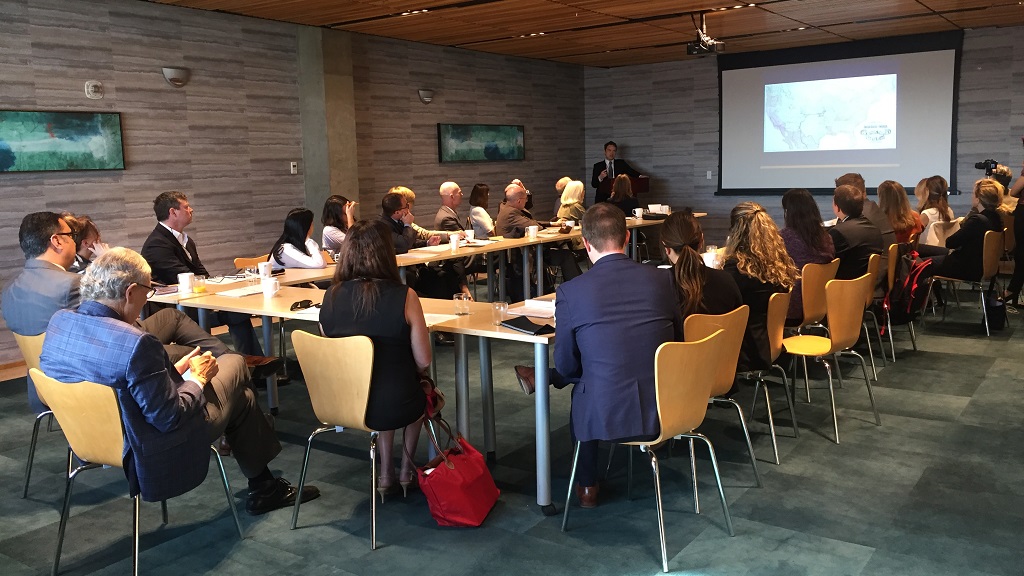
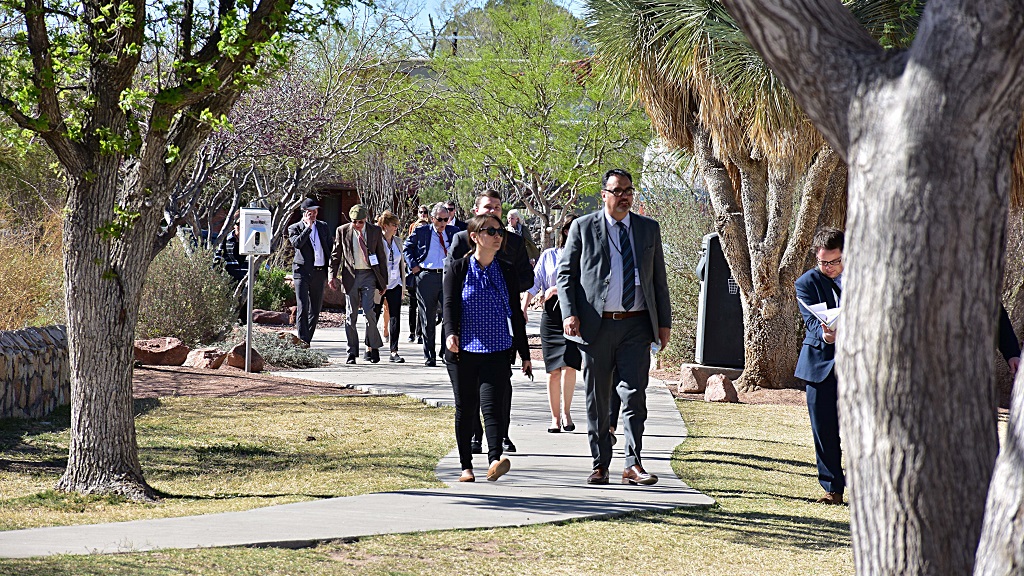
Over two days from March 28-29, delegates toured a migrant detention facility operated by Immigration and Customs Enforcement (ICE); met with El Paso Mayor Dee Margo, state Senator Jose Rodriguez, Congresswoman Veronica Escobar, Diocesan Migrant & Refugee Services Executive Director Melissa Lopez, Border Network for Human Rights Director Fernando Garcia, and University of Chihuahua Professor Rodolfo Rubio Salas; traveled across the bridge into Mexico; and shared with reporters from several interested local media outlets their individual thoughts on and impressions of the situation.

This delegation could not have visited the border region at a more relevant or opportune time.

Those outlets included El Diario de El Paso/Juárez, Televisa Juárez, the local CBS/FOX affiliate named KFOX 14KRWG Public Media, Telemundo, and Univision/Entravision/KINT.

The delegation was led by the Honorable Michael Camuñez, a Pacific Council Director, chair of its Mexico Initiative, and former U.S. Assistant Secretary of Commerce; and Dr. Patrick Schaefer, Pacific Council member and executive director of the Hunt Institute for Global Competitiveness at the University of Texas. Pacific Council President and CEO Dr. Jerrold D. Green also was a member of the delegation.

What follows is a summary of what delegates learned on the trip and recurring themes from their meetings.

Recurring Themes

One theme that delegates heard repeatedly from El Pasoans was, “Thank you for coming to the border region to learn about what is actually going on here.” 

As the debate over President Trump’s national emergency declaration raged on, it became clear to delegates how interdependent and interconnected El Paso and Juárez really are. From a bird’s eye view, the region looks like a single integrated city. Their downtowns are within walking distance of each other via the Santa Fe Bridge.

Although there are many disagreements about whether or not the situation rises to the level of a “crisis” or “national emergency,” many of the officials that delegates spoke to agreed it is a humanitarian crisis that requires action, and that immigration reform is critical. What is clear is that rising numbers of Central American migrants are fleeing violence and poverty in their home countries and heading north to seek asylum, which has overwhelmed existing facilities and services.

In the weeks leading up to the delegation’s visit, the arrival of Central American migrants to the border surged to the point where existing detention and housing facilities became overwhelmed, including Annunciation House, a nonprofit organization that houses migrants.

As our delegates walked across the border bridge from Juárez to El Paso, they could see a large number of migrants—including families and children—who despite the hot days and cold nights were sleeping under the bridge in the open air with silver mylar “space” blankets, exposed to the elements. There was also a pair of U.S. customs agents at the middle of the bridge checking documents and turning away asylum seekers before they could reach the physical border where they are allowed to claim asylum.

Although no one knows for sure the primary cause of this surge, there were many theories. Some said it was the warming spring weather. Others said it was the president’s threat to close the border. Many agreed that while they would not call the situation a national security crisis or even an emergency, it certainly is a problem and a humanitarian crisis. 

Many officials and experts believe that migrants were fleeing gang violence and extreme poverty in Central America, and that therefore aid to those countries should be increased to address those issues. As the delegation came to a close, however, the White House announced that U.S. aid to the Northern Triangle—Honduras, El Salvador, and Guatemala—was being cut.

Reports in the Washington Post and The New York Times noted that ICE and Border Patrol were holding migrants for longer than usual and then releasing them by the hundreds onto the streets of downtown El Paso. This was reported when administration officials including then-Homeland Security Secretary Kristjan Nielsen and Customs and Border Protection (CBP) Commissioner Kevin McAleenan (who has since been appointed to replace Nielsen as acting Homeland Security Secretary) visited the area.

During a tour along the border region, delegation leaders Camuñez and Schaefer told delegates that the U.S.-Mexico border is actually a great success story. “It is safer and more peaceful than most borders around the world,” they noted. “Imagine if the United States had a less friendly neighbor?” The border region itself is located in a harsh and arid desert. “It is gut-wrenching what migrants go through to get here,” said Camuñez. “Sometimes we lose sight of the humanity in this debate.”

Inside an ICE Detention Center

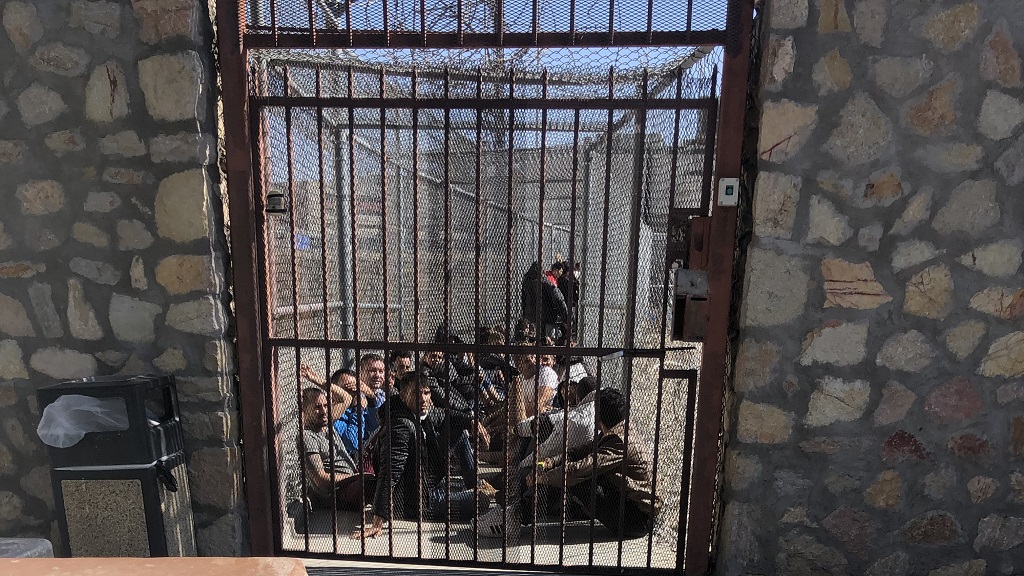
The ICE facility visited by our delegation was built in 1966 and is one of six facilities owned by ICE, housing about 3,000 people on any given day. Nationwide, there are some 40,000 people in custody. There were about 800 migrants at the facility delegates toured, representing 84 countries. There were no families or children at this facility, only adult males and females. Their average length of stay in the facility is 40 days.

Delegates visited a courtroom on site where migrants’ cases are heard, operated by the Department of Justice’s Executive Office for Immigration Review. The court recognizes different levels of criminality; people simply crossing the border without documents are considered the lowest level. The first offense is a misdemeanor; the second offense is a felony. The vast majority of asylum seekers are non-criminals, although there are criminals represented as well.

When a person is given a deportation order, their country of origin must first agree to accept them back. Some countries are more cooperative than others. For example, Somalia would not accept people back for a long time, although now it does. Countries with poor relations with the United States, such as Iran, are less accommodating.

ICE has discretion to issue a bond to those who cross illegally and to then release them if they have family in the United States, but not if a migrant is claiming asylum at an official port of entry. This creates an incentive for migrants to cross illegally.

Migrants are able to claim asylum multiple times. If their first claim is not approved, they may try again. ICE cannot prosecute people for claiming asylum at a port of entry, only if they cross illegally. However, ICE has discretion to issue a bond to those who cross illegally and to then release them if they have family in the United States. ICE does not have discretion to issue a bond if a migrant is claiming asylum at an official port of entry. In that case, if they win their asylum case they are released, if they lose they are deported. This creates an incentive for migrants to cross illegally.

Detainees at the facility are categorized by the color of their uniforms: blue means non-criminal, orange means low-level criminal, red means convicted felon, white means they work in the kitchen, and yellow means they are volunteer workers who are paid $1 a day. What is considered “a criminal” was left vague, but multiple entry attempts were enough to meet that standard. There are not many incidences of violence in the facility because detainees know they are not staying for too long.

Delegates toured the Intercultural Building, where prayer services are held, as well as the mess hall, barracks, processing center, and medical facility. The custody officers who process migrants are contracted workers. Detainees are permitted one hour per day for recreational time; the rest of the day they spend in their barracks. They are also allowed legal research time for their cases. There are translation services available, with many detainees speaking indigenous languages. The facility has in-house medical, dental, and pharmacy services, administered by the U.S. Public Health Service.

The kitchen offers various cultural menus on a five-week cycle of meals. Detainees receive three meals a day, totaling 3,000 calories a day at a cost to the facility of $4.33 per detainee per day. Flags of every country lined the walls in the mess hall. The same-sex barracks housed about 85 detainees each, with tables and chairs in the middle and beds along the walls.

The detention center seemed orderly and professionally run, although a guard did shout at a detainee when she asked a Pacific Council delegate if he was with Human Rights Watch.

The Local Perspective

“El Paso is an unknown jewel,” Republican Mayor Dee Margo told Pacific Council delegates at El Paso City Hall.

The region is the intersection of three states—Texas, New Mexico, and Chihuahua—with the largest binational and bilingual workforce in the world. The El Paso-Juárez area is a single region that is highly interdependent. Of the 28 bridges linking Texas and Mexico, six are in El Paso. El Paso is the second highest crossing and the highest pedestrian crossing area along the border after San Ysidro near San Diego.

The mayor pointed out that the city and county of El Paso and a local foundation had recently approved a donation of $20,000 each—for a total of $60,000—for United Way to help with their immigration services.

Margo gained national attention following President Trump’s State of the Union address in February 2019 when the president pointed to the border fence in El Paso as promoting the safety of this city. The mayor pushed back and publicly stated that El Paso was perfectly safe before the border fence went up and that the president should not use El Paso as an example of the need for a border wall.

Margo said that the United States must do something about illegal immigration because the current situation is unsustainable. ICE, Border Patrol, and NGOs that cater to migrants are all overwhelmed. The city of El Paso recently sent buses to the Sun Metro bus station in downtown El Paso to keep migrants warm, because the station was overflowing. Officials are currently looking to build another facility in El Paso.

The mayor said the current situation is a product of the failure of both political parties in Washington, D.C., to pass immigration reform. He urged everyone to contact their members of Congress and tell them to do something about the immigration situation.

The NGO Perspective

Delegates met with Diocesan Migrant & Refugee Services Executive Director Melissa Lopez and Border Network for Human Rights Director Fernando Garcia at Diocesan’s headquarters in El Paso.

Diocesan is the largest provider of low cost and free services to immigrants and refugees in this region, which includes New Mexico. In 2018, they served 21,000 people, 90 percent of them for free. Some of the services they provide include legal representation and education. They have an education program for adults in detention to represent themselves in court, and another program for people ruled incompetent to represent themselves.

The region began to see an increase of unaccompanied minors crossing the border starting in summer 2014. Diocesan provides services to about 2,500-3,000 children in a year.

Almost all of the migrants they serve end up leaving the El Paso region to other places all around the country because they will have a higher chance of successfully achieving asylum status away from the border region.

Almost all of the migrants they serve end up leaving the El Paso region to other places all around the country because they will have a higher chance of successfully achieving asylum status away from the border region, where emotions are high, judges are conservative, and about 4 percent of cases get granted asylum.

Within 100 miles of the border, immigration agents can automatically deport migrants without an appeals process, so they set up checkpoints at the 80-mile mark to carry this out.

Garcia was a journalist in Mexico before he founded Border Network to build a community and raise awareness of human rights and migrant issues. 

Border Network works in conjunction with CBP on a program called Hugs Not Walls, which brings separated families together in the mostly dry Rio Grande for a few moments before they are brought to different detention facilities or elsewhere. Netflix released a documentary on the program titled “A Three Minute Hug.”

Schaefer pointed out that the legal services provided by organizations such as Diocesan and Border Network are so important because there is no law school in El Paso. The closest one is in Albuquerque, New Mexico, about four and a half hours away. “In an area where knowledge of the law is so important, we don’t have the institutions to support people in need.”

The State and Federal Perspective

Congresswoman Veronica Escobar (D-TX 16) and state Senator Jose Rodriguez (D-TX 29) gave delegates their take on the border situation.

The day before Escobar met with Pacific Council delegates, she called on Secretary Nielsen to resign. Less than two weeks later, she did.

Delegates learned that Canada takes a different approach to immigration by offering them housing, jobs, and training. The representatives called on administration officials to learn the reality on the ground in border communities like El Paso, which they called vibrant, binational, and multicultural. They also called for a renewed push for immigration reform. 

Delegation leader Michael Camuñez pointed out that during the recent NAFTA negotiations that resulted in the USMCA trade deal, Canada and Mexico wanted to update the “temporary entry for workers” section, which allows workers to cross the border. However, U.S. trade negotiators flatly refused to even discuss it. Camuñez said it was a once in a generation opportunity to update some outdated language, but it was not on the table.

He also pointed out the lack of adequate infrastructure at the border, which puts a huge strain on the system. He said border security can largely be addressed by technology and other ideas such as moving the actual borders deeper into each country so that trucks can be checked at pre-inspection sites and therefore won’t get stuck in border traffic for hours.

He said the Mexican government is willing to work with the U.S. government on these ideas, pointing out the fact that U.S.-Mexico security cooperation has increased in recent years. Anyone who flies into Mexico is screened with U.S. no-fly lists and security standards. And new Mexican President Andrés Manuel Lopez Obrador (AMLO) is now calling for a “Marshall Plan for Central America.”

The Mexican Perspective

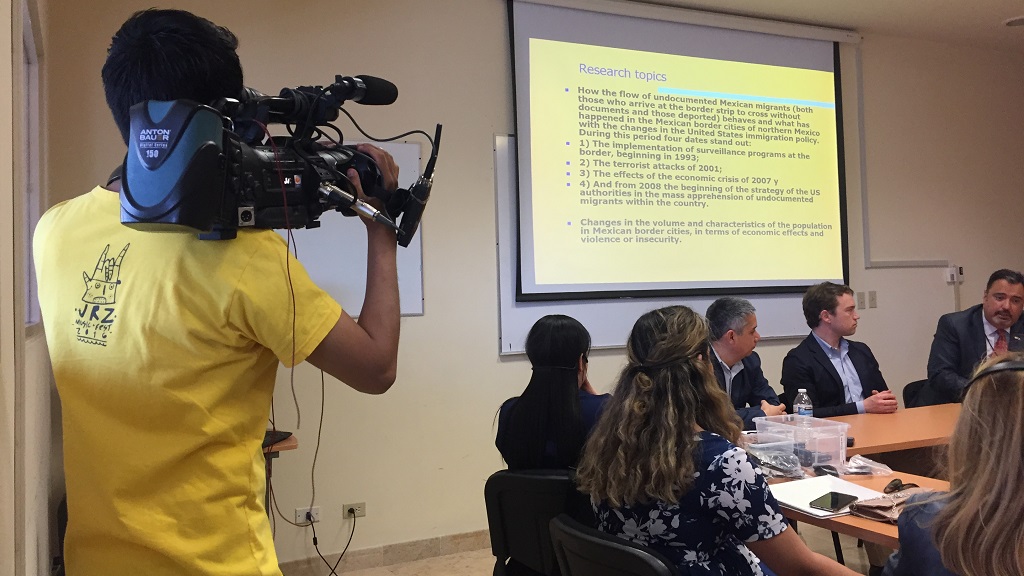
Delegates met with Professor Rodolfo Rubio Salas at El Colegio de Chihuahua in Ciudad Juárez, Mexico.

A translator was provided although several delegation members did not need the translation, a sign of the Pacific Council’s strong hemispheric ties.

Salas said the increase of Central Americans to the Juárez region has been significant, and that Juárez was not built to withstand such a surge. But there has also been an increase of migrants from Cuba, who receive special treatment from the United States compared to other nationalities.

The objective of most migrants, Salas said, is to claim asylum with the United States. However, he added that the Mexican government has not released official data on how many migrants are crossing from Guatemala to Mexico or how many of them want to claim asylum. Salas claimed the latter statistic is as high as 90 percent, and that many of them are traveling as family units because they know they have a better chance of getting asylum if they have women and children with them.

He said AMLO has a more lenient policy toward migrants than his predecessor. The new administration knows that people are in need and that the Mexican government must do something. Mexico now wants a more humanitarian image in regards to immigration. Migrants can be in Mexico for 30 days and then apply for an extension. Mexico has started a program to hire Central Americans in Chiapas and Oaxaca in southeast Mexico. 

Salas pointed out that more caravans are forming—including one with 20,000 people—and on their way to the border, which the Mexican government is becoming more concerned about. The government has recently used news media to spread the message that it won’t be able to assist migrants in caravans at the Guatemalan border. 

He also argued that a U.S. border wall will not do much to stem the flow of migrants or drugs.

Conclusion

Amid the national debate about immigration and border policy that often includes conflicting information and inflammatory rhetoric, Pacific Council delegates who traveled to El Paso and Juárez were able to gain firsthand experience and knowledge of the situation on the ground. Local residents and officials repeatedly thanked delegates for making the trip to Texas to see the border region for themselves.

The United States and Mexico would be well advised to study the successful partnership between El Paso and Juárez as they debate what to do about immigration and border policy.

The timing of this delegation was especially relevant. Although there are many disagreements about whether or not the situation rises to the level of a “crisis” or “national emergency,” many of the officials that delegates spoke to agreed it is a humanitarian crisis that requires action, and that immigration reform is critical. What is clear is that rising numbers of Central American migrants are fleeing violence and poverty in their home countries and heading north to seek asylum, which has overwhelmed existing facilities and services.

Delegates also learned about the deep historical, familial, cultural, social, political, and economic ties between El Paso and Juárez. The highly interdependent region has the largest binational and bilingual workforce in the world. There are lessons of cooperation and collaboration to be learned here; the United States and Mexico would be well advised to study the successful partnership between El Paso and Juárez as they debate what to do about immigration and border policy.

_______________________

Justin Chapman is the Communications Officer at the Pacific Council on International Policy.

Check out more photos from the trip on our Flickr page.

Learn more about the Pacific Council’s Mexico Initiative.

The views and opinions expressed here are those of the speakers and do not necessarily reflect the official policy or position of the Pacific Council.


First Justice, Now Peace

Joan Williams, Miss Crown City 1958 who was denied a place in the Rose Parade due to her race, has died

By Justin Chapman, Pasadena Weekly, 2/28/2019

Joan Williams, whose story of racial reconciliation inspired the nation, passed away from ovarian cancer on Feb. 20 at her home near the Rose Bowl. She was 86.

More than a half-century after she was discriminated against by city officials in 1958 and denied a ride in the Rose Parade because she was African American, the Pasadena Weekly reported on her story and she finally rode in the parade in 2015.

Pasadena City Councilman John Kennedy invited Williams’ children Angela Williams, Robyn Wood and Robert “Chip” Williams to say a few words about their mother at Monday’s City Council meeting. The council adjourned the meeting in her honor.

“Joan Williams was a proud, resolute, kind, loving, contemplative person who did not seek attention, who let the story of her disrespect remain untold for many years because she was not seeking personal attention,” Kennedy told the Weekly. “However, for the greater good, and to help build ‘one Pasadena,’ she allowed [the Weekly] to bring a light to her story, part of the Pasadena story, part of the American story.”

“I am saddened to hear the news of her passing but feel relief that the city of Pasadena was able to right a past wrong and give her Roses while she was still alive,” said former Council member Jacque Robinson.

‘Righting that Wrong’

In 1958, then-26-year-old Williams was nominated by her co-workers at City Hall to represent Pasadena as Miss Crown City, which was a Rose Queen-esque honor at the time. She was also the first African American hired to work at City Hall, albeit inadvertently, in what was then known as the Municipal Light and Power Department.

Williams was “selected from a field of seven finalists by a committee of judges from newspapers and the Tournament of Roses Association,” according to an Aug. 3, 1958, article in the Independent Star News.

In her capacity as Miss Crown City 1958, she was scheduled to ride on the city’s float in the Jan. 1, 1959, Rose Parade, but was denied the honor after city officials discovered the light complexioned Williams was African American and canceled the float. Then-Pasadena Mayor Seth Miller, who had crowned Williams at a coronation ceremony, later refused to take a photo with her at the annual city employees’ picnic at Brookside Park, and she was also not allowed to cut the grand opening ribbons at Sears, J.W. Robinson and other businesses. Her City Hall coworkers and bosses ostracized her until she left the job.

Inr 2013, this reporter interviewed Williams about her experience for an article in the Pasadena Weekly, the first time her story was told. On April 5, 2014, the local nonprofit Men Educating Men About Health (MEMAH) honored Williams at a gala at the Western Justice Center. During that event, Congresswoman Judy Chu (D-Pasadena) presented an award to Williams. City Council members Steve Madison, Terry Tornek, Robinson and Kennedy were also in attendance, and they later directed city staff to investigate her story. Madison was the first city official to apologize for the 1958 incident “on behalf of my forebears,” he told her.

In May 2014, Robinson, who was vice mayor at the time, called on the city to officially apologize and offered Williams the opportunity to ride in the parade with her in a car. In October 2014, then-Mayor Bill Bogaard and then-Tournament of Roses Executive Director Bill Flinn took Williams to lunch and offered her a spot on a float in the upcoming parade.

“She had put the ugliness of [the 1958 incident] behind her, so when she was contacted to ride on a float in the 2015 parade she wasn’t sure she wanted to do it because it was like opening up a door that she had closed,” Williams’ son Chip told the Weekly. “But she realized that it meant a lot to the community and would allow for healing, so she felt it was important to ride on the float so that there would be reconciliation.”

Williams told the Weekly that before accepting the offer to ride on a float, she wanted to make sure it wasn’t sponsored by an organization that espoused homophobia in any way.

Pasadena Weekly again wrote about her story on Dec. 24, 2014, after which dozens of local, national and international media outlets picked it up.

On New Year’s Eve 2014, Bogaard delivered a formal letter of apology to Williams on behalf of the city written on the mayor’s official letterhead.

“I am truly pleased that you will be in the parade this year, and I am extremely sorry that this opportunity was not made available to you in 1958,” Bogaard wrote. “You have kindly said that the Tournament’s invitation to you represents a new commitment in Pasadena to our efforts to embrace differences and welcome all members of the community. I share that view with you. As Mayor, I hereby apologize to you for the experience you had as Miss Crown City in 1958 and I thank you for accepting this year’s invitation and for the friendship you have expressed for Pasadena.”

Just before riding in the parade, Williams told the Weekly that she was “delighted and really appreciate that the city recognized that they needed to make some kind of gesture towards righting that wrong. Pasadena has shown the community that they’re on the right path and that they’re recognizing these things and that it’s something they need to follow through on.”

On Jan. 1, 2015, nearly six decades after being discriminated against by Pasadena city officials for being black, Joan Williams finally got to ride in the 126th Rose Parade in the lead theme banner float. The apt theme that year was “Inspiring Stories.”

“To be on that float is especially important because it will point out that with people of good will working to correct these mistakes, change can come,” said Williams. “We hope it won’t take so long, but when you look at our history, none of it has happened overnight, none of it has happened without a fight. The fight goes on.”

Chip said she was “happy to represent the community and have that closure.”

‘To the Betterment of Pasadena’

After riding in the parade, Williams told the Weekly that the most important thing to her was the community showing her kindness and appreciation along the route. She heard from people all across the country who were excited to tune in and watch Miss Crown City finally riding in the parade. KTLA, however, did not mention her in their televised broadcast of the parade.

In the months that followed the parade, several organizations and local and state officials, such as then-LA County Supervisor Michael Antonovich and state Assembly member Chris Holden, honored Williams.

“Joan Williams was the model of poise and grace,” Holden wrote in a text message to the Weekly. “Several years ago, I honored her on the Assembly floor during Black History Month as an unsung hero in recognition of her contribution to the advancement of civil rights. As a result of her courage in calling out racial discrimination in the early years of the Tournament of Roses, her contributions to the betterment of Pasadena will not be forgotten.”

Jim Morris, executive director of MEMAH, the organization that originally honored her in 2014, said he is “saddened that Joan has left us but happy that she lived long enough to get the justice that was due to her.”

‘A Mother Figure in the Community’

Williams graduated from Los Angeles High School in 1950. She attended Wolfe’s School of Costume Design by day and took general studies courses at Los Angeles City College by night. She saw Dr. Martin Luther King, Jr., deliver a sermon on February 28, 1960, at Friendship Baptist Church in Pasadena, in which he talked about the Montgomery bus boycott and the foundations of a meaningful life.

In 1952, she married Capt. Robert W. Williams, who was one of the original “Tuskegee Airmen” fighter pilots in World War II whose story helped inspire the movie of the same name starring Laurence Fishburne. Robert also co-wrote and co-executive produced the film, which was released by HBO in 1995 and won a Peabody Award and three Emmy Awards.

Joan and Robert were married for 45 years when he died from prostate cancer in 1997. They met when Robert returned home after the war and enrolled at UCLA. They enjoyed golfing at Brookside Park and dancing to jazz music. Her favorite was Ella Fitzgerald. She also designed her own clothing.

Williams said she and her husband encountered racism from realtors when they tried to purchase a home in the San Fernando Valley, so they built their own house in 1963 on Arroyo Boulevard overlooking the Rose Bowl in the Arroyo Seco using African American architects, designers and contractors. That year, she started working at Kaiser Permanente as a receptionist, where she worked for 32 years, including five years in a Medicare office in Kaiser’s regional office on Walnut Street.

“My mother was a graceful, elegant and caring woman,” said Chip. “My mother’s and father’s open arms and open hearts welcomed people from all over the world into their home. Many of my gay friends felt that where their parents didn’t accept them, they found a surrogate mother in my mother who did accept them. She was a mother figure to many people in our community.”

Chip added that his mother was very involved in her community, including by advocating for proper street lighting and equitable distribution of Rose Bowl event traffic. She served as treasurer and financial secretary of the Pasadena-Altadena chapter of an African American women’s service sorority called the Links. In that capacity, she also organized a Saturday school for students in the Pasadena Unified School District (PUSD) who needed support with reading and math, and served as the school’s director for two years.

After retiring in 1994 from Kaiser, she volunteered at the Pasadena AIDS Service Center, read to PUSD students and participated in Leadership Pasadena.

Joan Williams is survived by three children, four grandchildren and four great grandchildren. Her family is currently planning a memorial.


Outnumbered and irrelevant

Supporters of 2019 Rose Queen drown out Westboro Baptist Church picketers with messages of love

By Justin Chapman, Pasadena Weekly, 2/28/2019

Westboro Baptist Church protesters arrived in Pasadena with a whimper Monday morning. 

A half-dozen or so members of the anti-gay, anti-Semitic, Kansas-based church picketed on the sidewalk outside Pasadena’s Sequoyah High School, located on the Neighborhood Unitarian Universalist Church campus on Orange Grove Boulevard.

On its website, Westboro said they were targeting Sequoyah because the 2019 Rose Queen Louise Deser Siskel wrote a column in the Los Angeles Times on New Year’s Eve coming out as bisexual. The column also noted that she is Jewish and a senior at Sequoyah.

The Westboro picketers, including Shirley Phelps-Roper, daughter of the late church founder Fred Phelps, were outnumbered by dozens of counter-protesters in several clusters on and around the campus and in the Rose Bowl parking lot about a mile down the road.

“Today we met hate and venom with love and compassion,” Jessica Gable, communications coordinator at Neighborhood Church, told the Pasadena Weekly. “Members of our community, as well as the Pasadena community at large, surrounded the Sequoyah students with support and messages of kindness. We are thrilled at the triumph of inclusion that we witnessed today.”

Several Pasadena police officers and private security were on the scene, as was Siskel, who was surrounded by supporters. Westboro picketers held signs with offensive — and mostly irrelevant — slogans, such as “God sent the shooter” and “God hates Christ-rejecting, apostate Jews.”

Siskel’s supporters held up rainbow banners and signs with slogans such as “Love > Hate,” “I love my trans son,” “Love lives here,” “My God loves all and so do we” and “Blessed to be LGBT,” among many others.

On Sunday, Neighborhood Church Social Justice and Inclusion staff and LGBTQ community organizers hosted a peace training and poster-making workshop. The fruits of their labor were posted around the campus and written in chalk on the sidewalk, featuring messages of love and acceptance.

The protest lasted less than half an hour and ended without incident. Last week, Neighborhood Church officials said they were discouraging people from engaging with Westboro protesters.