California public higher ed needs sufficient funding, Baum writes in op-ed


California’s public higher education segments – community colleges, California State University, and University of California – require adequate funding in order to continue the vision laid out decades ago in the state’s Master Plan, according to a new op-ed in the Sacramento Bee penned by CCLP managing director and president of the California Community Colleges Board of Governors Geoffrey Baum. The article was co-written by Lou Monville, chair of the CSU Board of Trustees, and Bruce Varner, chair of the UC Board of Regents.

“Ensuring the dream of higher education is achievable for all Californians depends heavily on adequate funding for all three sectors of higher education,” the state education leaders wrote. “The growing emphasis on community colleges – on the state and federal level – is a positive and welcome development. But an isolated increase in support for community colleges could be undermined by insufficient support for our other segments.”

If community colleges students are unable to proceed to CSU or UC schools due to inadequate funding of those higher education institutions, it “could have detrimental consequences for California’s economy, which requires increasing numbers of highly skilled workers to continue our recovery from the recession.”

The Master Plan was designed in 1960 as a blueprint for the state’s higher education system to ensure that high school graduates could pursue a quality, public higher education.

“The creators of the Master Plan wisely envisioned California’s higher education segments as three parts of a whole,” the op-ed continues. “If we want California’s public higher education system to continue growing and serving the state’s current needs, there must be adequate funding for all three higher education segments.”


LA Theatre Works to honor Geoffrey Cowan

Well-known as a best-selling author, public interest lawyer, academic administrator, government official, distinguished professor, and Emmy Award-winning producer, CCLP director Geoffrey Cowan is also a notable playwright who will be honored by LA Theatre Works to celebrate their decades-long collaboration.

LATWlogo.pngCowan has worked with LA Theatre Works for 25 years on his award-winning play Top Secret: The Battle for the Pentagon Papers, which originally premiered as a radio play in 1991 in front of a live audience for national broadcast on NPR and later toured the country in 2007-8, had a five week run in New York City in 2010, and played to audiences throughout China in 2011 and 2013. The play celebrates the importance of the press, the First Amendment, and an independent judiciary. In New York and China CCLP presented “Top Secret Talks,” a series of panel discussions with leading journalists, scholars and policymakers about the contemporary lessons of the Pentagon Papers story.

“Geoffrey Cowan has been a significant person in the life of LA Theatre Works since 1991, when I called him to ask a question about a constitutional issue which he answered and then let me know that he had written a play,” said Susan Loewenberg, producing director for LA Theatre Works. “That casual remark turned into almost a quarter of a century of fruitful collaboration between Geoff and LATW. Geoff is truly a Renaissance man and we are honored to be honoring him.”

Geoffrey_cowan.jpg

LA Theatre Works is a non-profit media arts organization based in Los Angeles whose mission for over 25 years has been to present, preserve and disseminate classic and contemporary plays.

Co-written by Cowan and pioneering journalist and teacher Leroy Aarons, Top Secret is an inside look at the Washington Post‘s decision to publish a top-secret study documenting the United States’ involvement in Vietnam. The subsequent trial tested the parameters of the First Amendment, pitting the public’s right to know against the government’s claim of secrecy. The epic legal battle between the government and the press went to the nation’s highest court and is perhaps the most important Supreme Court case ever on freedom of the press.

In its review, the Associated Press called Top Secret “an engaging, well-acted, historical drama by Geoffrey Cowan and Leroy Aarons. With cloak-and-dagger intrigue, government suppression, courtroom drama and an unusual theatrical format, the play will please theater enthusiasts and history buffs alike. The ‘write what you know’ maxim couldn’t be more apropos in this case, evidenced by Cowan and Aarons’ clear presentation of the facts and splendidly nuanced dialogue, which consistently rings true.”

“It has been a terrific partnership on this play,” said Cowan. “I’m proud to have worked with LA Theatre Works all these years, and thrilled to celebrate the intersection of education, culture, and these important issues of free speech, free press, and independent judiciary.”

In 2011, LA Theatre Works partnered with Ping Pong Productions to take the production on a 3-week tour of China. The group played to sold-out crowds in Shanghai, Guangzhou, and Beijing. In June 2013 Top Secret returned to China for a second tour that the the New York Times called a “spare, fast-paced docudrama,” and the New Yorker called “thrilling.”

shanghai-led-screen.jpg
Cowan with his wife Aileen Adams at the Shanghai Dramatic Arts Center

Cowan said the play started in a classroom with a course he taught on media law at UCLA, then wound up in a theatre, using the stage as a classroom. LA Theatre Works uses Top Secret and other plays to provide lessons for thousands of students in all 50 states.

The March 25 gala will include a presentation of the pivotal “Freedom of the Press” scene from the play, featuring the full cast. Ed Asner, Ed Begley, Jr., Jane Fonda, and other respected artists of stage and screen will perform excerpts from Top Secret and other plays. Visit latw.org/gala for tickets and more information.

Reeves exposes ugly truth of Japanese internment camps in new book

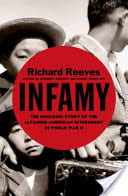
CCLP senior fellow Richard Reeves examines the key causes and dire consequences of the Japanese-American internment in relocation camps during World War II in his new book, concentrating on a shortsighted military strategy and anti-Japanese sentiment following the December 7, 1941 attack on Pearl Harbor.

infamy.jpg

“A day that will live in infamy,” President Franklin D. Roosevelt said of the attack in asking Congress for a Declaration of War, after which the president himself signed an executive order that moved more than 120,000 Japanese, most of them American citizens, “behind barbed-wire and machine gun towers, into concentration camps spread across the most barren and hostile deserts and swamps of the country,” said Reeves. “Their only crime: looking like the enemy.”

Infamy: The Shocking Story of the Japanese American Internment in World War II provides an authoritative account of the incarceration of these American citizens and Japanese immigrants during the war. Men we usually consider heroes – FDR, Earl Warren, Edward R. Murrow – were in this case villains, but we also learn of many Americans who took great risks to defend the rights of the internees.

Reeves wrote the book because he doesn’t want that to happen again “if the nation becomes hysterical about real or imagined threats to national security,” he said. “Without knowing too much about it, I always wanted to study the incarceration of innocent Japanese-Americans in desert concentration camps during World War II. I found that what happened was far worse than I imagined. Fear, racism and raw greed drove Americans to crush thousands of lives, breaking up families and stealing property under the leadership of men as historically revered as President Roosevelt and California’s attorney general, Earl Warren. Shamed, the victims of the camps refused to talk about it for decades, even as their sons served in the most decorated American combat unit in history. They do now. It happened here and it could happen again, to Muslims, to Latin Americans. I want to let people who love America and love the Constitution know that that “piece of paper,” as described by Assistant Secretary of War John McCloy, was shredded in a wave of national hysteria.”

Called “an engaging and comprehensive depiction of an essential, but sometimes overlooked, era of U.S. history” by Kirkus Reviews, the book tells the story of this appalling chapter in American history more powerfully than ever before.

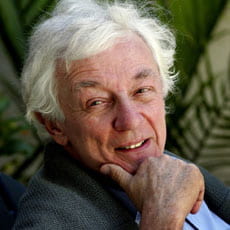
richard_reeves.jpg

“Reeves liberally quotes politicians, reporters and citizens, rehashing the argument that ‘a Jap is a Jap’ and therefore all Japanese aliens and even citizens on the West Coast needed to be removed,” writes Kirkus Reviews. “Reeves includes firsthand and secondhand accounts of life inside the camps. Though Reeves’ subject is an essentially bleak picture of hysterical racism…the author does a solid job of balancing the dreary passages with occasional shots of humor, humanity or both. Reeves unearths and makes public a painful national memory, but he does so while maintaining the dignity of those held behind barbed wire and unmasking the callous racism and disregard of the people who put them there.”

Tom Brokaw calls the book “a detailed account of a painful and shameful period in modern American history. Infamy combines Reeves’s journalist’s training with his historian’s eye to give us a page-turner on how hysteria at the highest levels can shatter our most fundamental rights. Brace yourself and read this very important book.”

Racism, greed, xenophobia, and a thirst for revenge: a dark strand in the American character underlies this story of one of the most shameful episodes in our history. But by recovering the past, Infamy has given voice to those who ultimately helped the nation better understand the true meaning of patriotism. The book is scheduled for publication on Tuesday, April 21, by Holt, Henry & Company.

Reeves, a former New York Times and Frontline journalist, a senior lecturer at the USC Annenberg School for Communication & Journalism, a syndicated columnist and an award-winning documentary filmmaker, is embarking on a national speaking tour to promote his new book, including participating on a panel at the LA Times Festival of Books at the Hancock Foundation at USC at 2 p.m. on Sunday, April 19. The panel will be moderated by Jon Wiener and look at American milestones in history. Joining Reeves on the panel will be Ed Larson and Scott Martelle. Reeves is also the biography judge for the LA Times Book Prize.

Reeves is featured in a film called “Searching for Camelot” premiering at the Garden State Film Festival on March 21. The film is about people who were living in Greenwich Village when John F. Kennedy became president. Reeves was interviewed in the film about what it was like to be in the Village in the 60s, what it was like living next door to Bob Dylan, and what it all meant (he doesn’t remember).

Reeves will be giving a series of lectures at the New York Historical Society in April on the Japanese internment. C-SPAN has filmed one of his classes on long-form journalism which they will broadcast later this spring.

Cowan joins effort to increase university partnerships between California and Mexico

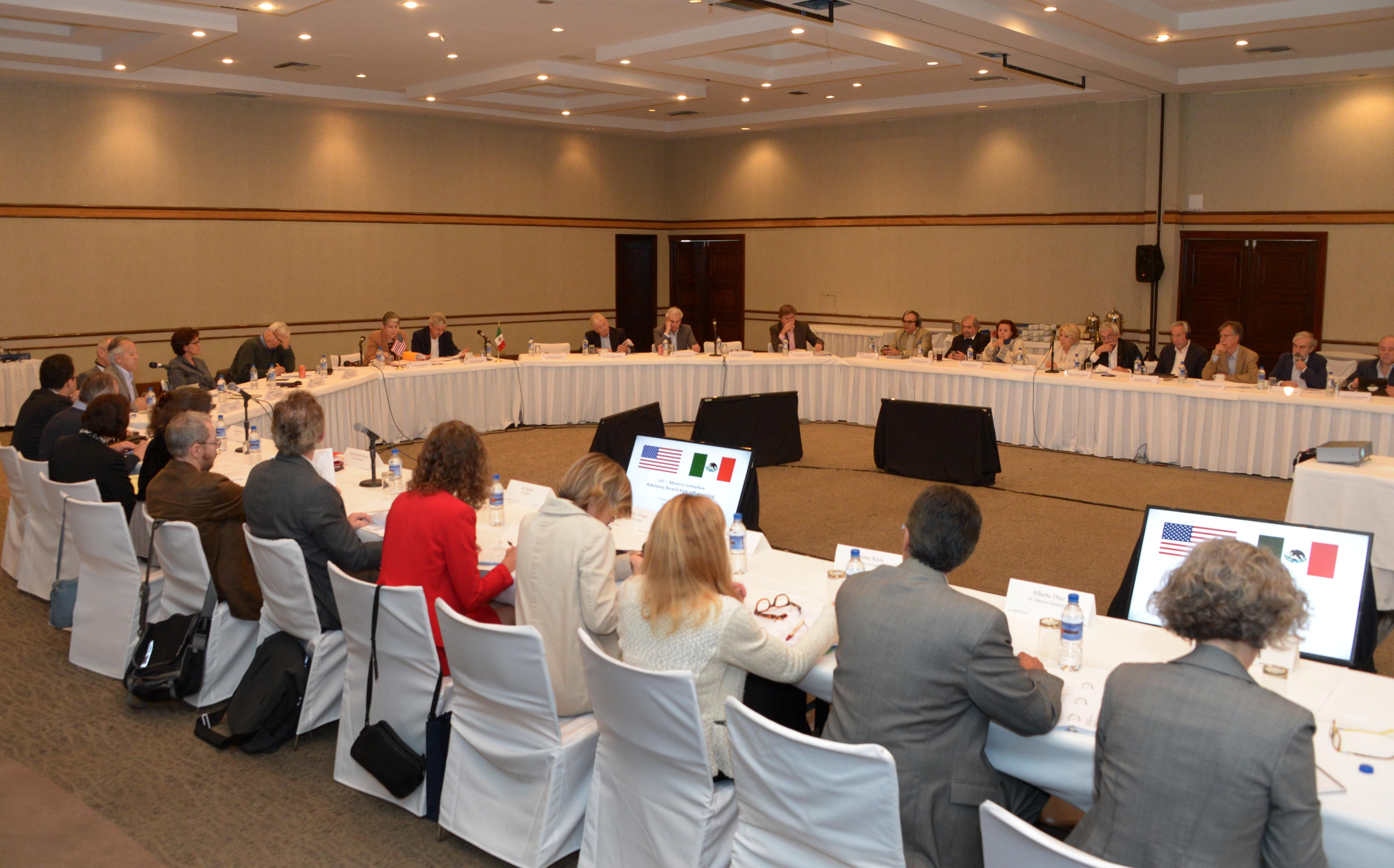
Education leaders from Mexico and California convened last week as part of an initiative to identify key areas of research collaboration in an ongoing partnership to build sustained, strategic and equal relationships between educational institutions on both sides of the border.

University of California president Janet Napolitano and National Autonomous University of Mexico provost Eduardo Bárzana García chaired the inaugural meeting of the UC-Mexico Initiative Advisory Board. The two-day meeting was held in Ensenada, Mexico, on February 26 and 27, 2015.

During the meeting, scholars and experts met in breakout sessions to discuss education, energy, environment, arts and culture, and public health.

Geoffrey Cowan, president of the Annenberg Foundation Trust at Sunnylands, a USC University Professor and director of the USC Annenberg Center on Communication Leadership & Policy, participated in the historic meeting as a member of the advisory board. He said the goal was to identify important scholarly collaborations on which Mexico and the University of California can work together.

“California is interdependent in so many ways with Mexico,” said Cowan. “Our economies are heavily interdependent, our environment, our coastline, public health, education. These are all common issues we have, so if we can work together we can build both economies and both societies in a more dynamic way. We’re going forward with major research collaborations between these countries in areas of mutual interest.”

One of Sunnylands’ areas of focus is the Pacific Rim with an emphasis on U.S.-Mexico relations. This effort continues work began in 2012 when Sunnylands, in partnership with the Woodrow Wilson International Center for Scholars, convened a retreat and released a report aimed at strengthening U.S.-Mexico relations. In the report, entitled A Stronger Future: Policy Recommendations for U.S.-Mexico Relations, preeminent bipartisan political, business, academic, and media leaders from the United States and Mexico concluded that the tone of the bilateral relationship should change and focus not just on a few issues, such as security and migration or trade and the economy, but instead be wide-ranging and cover a variety of mutual interests. The report presented innovative recommendations for enhancing regional competitiveness, new strategies to strengthen security, judicial reform, and furthering educational exchanges between the two nations, among other issues.

The UC-Mexico Initiative was launched in January 2014 by Napolitano and is led by UC Riverside.

group.jpg

Other participants in the Ensenada meeting included Monica Lozano, UC regent; Kim Wilcox, UC Riverside chancellor; Dorothy Leland, UC Merced chancellor; Gene Block, UCLA chancellor; Hunter Rawlings, president of the American Association of Universities; Jamie Merisotis, president and CEO of Lumina Foundation; José Narro Robles, president of the Universidad Nacional Autónoma de México; Juan Manuel Ocegueda, president of the Universidad Autónoma de Baja California; Enrique Cabrero, director general of Mexico’s National Council of Science and Technology; Salvador Alva, president of the Monterrey Institute of Technology and Higher Education, Antonio Lopez de Silanes, president of the Group for Birth Studies and chairman of the board of the pharmaceutical company Grupo Silanes; Rafael Tovar y de Teresa, president of Mexico’s National Council for Culture and Arts; and Jaime Valls Esponda, secretary general of ANUIES, which represents 180 higher education institutions throughout Mexico.

Pitch Perfect

Soccer’s popularity grows locally with 3,000 players recreationally competing in the Pasadena Adult Soccer League

By Justin Chapman, Pasadena Weekly, 3/5/2015

“We’re not trying to make our league so competitive. We just want people to play soccer because it’s soccer, it’s a great sport.”

Up until the 2014 World Cup in Brazil, soccer was nowhere near as popular in the United States as it is in most every other country in the world.

And while still not as ubiquitous here as in, say, the United Kingdom or Africa or South America, interest in soccer is on the rise — especially locally, where 3,000 players recreationally compete in the Pasadena Adult Soccer League.

One reason for the increase in popularity was the impressive performance by the US team in the World Cup, according to Christophe “Frenchy” Giovannelli and Sherisse Tuck, the South Pasadena couple who run the Pasadena league. They said participation increased last summer because of the World Cup.

“You have so many sports to choose from in America: football, basketball, baseball,” said 46-year-old Tuck, who has been running the league since 1998. “But soccer is getting bigger [in San Gabriel Valley]. The World Cup showed everybody that this is a sport.”

“The World Cup has a big effect,” said 43-year-old Giovannelli, who was born in France and came to the United States in 2002. “The US team did a good job. Everybody was very excited about it. This year all the restaurants and bars were showing the games, and it wasn’t like that during the last World Cup. They should have a World Cup every year.”

Soccer’s local popularity began its upswing in 1994 when Brazil and Italy duked it out during that year’s final World Cup match at the Rose Bowl. Brazil won 3-2 on penalties.

Another reason soccer is gaining prevalence in the San Gabriel Valley is the American Youth Soccer League (AYSO), established in 1964 in a garage in Torrance. The youth league now runs programs in nearly 900 communities across the country and has over six million alumni. 

“AYSO is huge around here,” said Giovannelli. “Those players, if they don’t make a club or a professional team, they still want to play soccer (when they get older). It’s a dream people have had since they were kids, since they played in AYSO. If they stopped playing at some point, but now they want to play soccer and want to enjoy it again, and they know they’re not going to play in a club, the only way to play is on a recreational league.”

Demand for the Pasadena Adult Soccer League is huge. It is difficult to get on a team, though Tuck and Giovannelli help players out when they can. The league’s growth is only hampered by the number of fields that are available for game play. But it took Tuck 10 years to grow the league, which is contracted by the city of Pasadena, to what it is today.

Beginning in 1972, there was a women’s soccer league in Pasadena. In 1998, nobody wanted to run it anymore, so Tuck stepped up.

“There were just a couple hundred people in the league back then and games were just on Sunday,” she said. “We started adding beginner’s leagues and men’s leagues, and in 2008 I started the Pasadena league. The city wanted someone to take over a league they had, so I turned in a proposal and they accepted it. We started with 12 teams and it grew from there.”

Now the league has 3,000 players from Glendale to Duarte and games are played every day of the week, year-round. The league also holds special tournaments on Thanksgiving weekend, during the World Cup and in May. The Mayday Melee Tournament is a fundraiser, while the Thanksgiving Turkey Shoot Tournament is more of a social potluck.

Tuck and Giovannelli said the league is a great social outlet. In fact, two players who met on a soccer team two-and-a-half years ago, Sarah Thalmann and Alejandro Moratorio, are now engaged to be wed in June. The Pasadena residents met on a team called Babe-raham Lincolns. Thalmann, 35, is an eighth-grade teacher at Marshall Fundamental High School in Pasadena. Moratorio, 37, works at LA Networks in Sherman Oaks. They both play on triple A division teams.

“I like that I could play virtually every day of the week if I wanted to, and I have,” said Thalmann. “The league has grown quite a bit in the last decade, but it continues to be well-organized. I also like that there are so many different levels. I’m definitely not going to want to play in the A divisions forever, and it’s great to know that I can continue to play as I get older.”

Moratorio has played in the league a total of six years, with a break in between to play in a more competitive men’s league, Los Angeles Super Metro.

“I’m very proud to be one of the first few hundred people who joined this league, and to see how tremendously it’s progressed,” said Moratorio, “from relatively few options in terms of days and fields to games being played on every day of the week, and on some great fields. The greater Pasadena area is extremely lucky to have this league. It’s a wonderful, safe place to play soccer and see friends on a regular basis.”

Sierra Madre resident Erik Pierstorff, 40, played soccer as a kid until he was 32 and just picked it up again last summer. He agreed that joining the league was a good way to meet new people, though he would like to see an easier way for free agents to locate a team.

“That is its biggest weakness from my perspective,” he said.

For regular seasons, players can choose between Men’s Only (11 players versus 11 players), Women’s Only (11v11), Men’s Over 30 (7v7), Men’s Over 35 (7v7), Women’s Over 30 (7v7) and Coed (7v7). The 7v7 leagues have some slightly different rules, including no offsides and no sliding. The league is divided up into four skill divisions: A, B, C and D. Teams choose which division they feel they are qualified for. It costs $675 for a team to sign up for each season, which lasts about eight to 10 weeks. That team cost is split up among its players, who are also required to purchase a $25 player ID card for each calendar year.

“Unless I know a team and its players, I won’t put them on Men’s A,” said Giovannelli. “They have to play on Men’s B first, because by experience you’ll have a team who think they can go on Men’s A, but that ends up not being the case, and that’s not fun for anybody. We keep an eye on it, because we don’t want a B team playing on a D team, or vice versa.”

Teams don’t have to necessarily place first in their league to move up, however.

“Some teams want to move up, but most teams don’t want to move up — it’s funny,” said Tuck. “They’ll win three seasons in a row and say, ‘We want to stay here.’”

The league’s referees are paid and highly qualified. Some of them are refs for FIFA. Others referee games for Major League Soccer. One of the refs will be one of four American referees for the next World Cup. The league also has a few high-profile players as well, including one woman who played on a professional team in Switzerland, another who played in the Women’s World Cup, a former player for Chelsea Football Club and the French and Dutch national teams, Cobi Jones of LA Galaxy and actor Matthew Lillard.

“We’re not trying to make our league so competitive. We just want people to play soccer because it’s soccer, it’s a great sport,” said Tuck. “We want to get people to play who have never played, who are in their 50s or 60s. We want them to come try soccer out.”

Although they have a small staff of two other employees, managing the league is a full-time job for both Tuck and Giovannelli. Fortunately for them, soccer is their passion. Indeed, for many people, soccer is an identity sport. It’s part of who they are as human beings, and serves as a fun way to fulfill their own self-expression.

For more information, visit adultsoccerleague.com.


California and China, a model for collaboration on climate change

International leaders should build on the success of the partnership between Chinese provinces and the state of California in combating climate change, according to a new report co-authored by CCLP senior fellow Orville Schell, the Annenberg Foundation Trust at Sunnylands, and the Asia Society.

“The latest agreement in November 2014 between the United States and China to reduce carbon emissions will help set a new course in the effort for greater international cooperation on climate change, but states, provinces, and municipalities also have a vital role to play,” reads the report, titled A Vital Partnership: California and China Collaborating on Clean Energy and Combating Climate Change.

The report was released by Schell and Geoffrey Cowan, president of the Annenberg Foundation Trust at Sunnylands, on March 4 at an Asia Society event in San Francisco. Gov. Jerry Brown and Nobel laureate and former U.S. Secretary of Energy Steven Chu also participated in the discussion.

“In the end if the U.S. and China do come together in a meaningful way to deal with climate change, it is not going to exclusively be between Washington and Beijing,” said Schell. “In fact that may be the least important link. Where the rubber will really meet the road is with states and municipalities dealing directly, so that the solution ends up being more of a patchwork, kind of a mosaic, rather than some big grand design where the presidents wave a wand in Washington and Beijing and bring about a solution. I don’t think it’ll happen that way. But it can happen piece by piece by piece.”

The authors of the report hope that the “unique interaction between California and China will help inspire new forms of constructive subnational efforts to address our critical transnational problems.” The report summarizes the ongoing efforts between California and China that are part of a significant effort to jointly address the challenge of global climate change at the subnational level.

“Both California and China are reaping benefits from their collaborations,” said Cowan. “Not only are these partnerships uncovering solutions to protect the air, water, and ecosystems within each country, but they are also catalyzing increased trade and investment in clean technology in both countries.”


Lessons learned in wild Africa

By Sammy Wu, Pasadena City College Courier, 2/26/2015

Justin Chapman, alumni of Pasadena City College and University of California, Berkeley, has many accomplishments under his belt.

At age 19, he began writing for the Pasadena Weekly, and from there, went on to publish news-breaking stories for over 20 leading publications, including LA Weekly, Berkeley Political Review, and Patch.com. At 19 years old, he was also the youngest elected member to serve on the Altadena Town Council, beating out the 57-year-old vice chairman of the council by earning 63 percent of the vote.

Now with the release of his book, Saturnalia: Traveling from Cape Town to Kampala in Search of an African Utopia, he can add author to his resume.

The book centers on his three-month excursion across Africa in Spring 2012 from Cape Town, South Africa, to Mityana, Uganda. During the journey, he barely avoided being institutionalized in a mental hospital, stayed in a poor township that valued art-making, was almost killed in a car accident, wandered about the mythical Zanzibar island, watched a witchcraft healing ceremony, and relapsed into his heroin addiction, all while hunting for compelling stories and finding love in the most unexpected of places.

The book, which is intended as a travel diary and an anthropological journal, grew out of a series of blog posts collectively called “Saturnalia: A Trek Through the Lands of Lawlessness.” The posts were infused with intense and often overwhelming emotions because Chapman would write his experiences as they were happening to him. He said many people were moved by his stories and waiting to see what would happen next. Such reaction was what motivated him to turn the blog into a paperback book.

The process of writing the book was difficult and time-consuming, for contrary to what Chapman initially thought, it took much more than just simply copying and pasting. Yet, the process was also cathartic because he learned a lot about himself—his limitations and his strengths.

And now he hopes that he could somehow inspire other readers, particularly those from this generation, about the undiscovered gems of Africa, as well as the lessons he learned along the way.

“I hope that the book will open people’s eyes to the real Africa, beyond what is depicted in television documentaries and fleeting media accounts of atrocities and struggles,” said Chapman. “The stories Saturnalia contains and the conclusions it draws are important and should not be passed over or forgotten.”

“This book can be beneficial and influence in positive ways the relationship people in the rest of the world have with Africa. There are remarkable changes going on in Africa and people should know about them,” he added.

The book has already garnered positive reviews from a myriad of renowned writers.

“Chapman’s vivid prose turns every paragraph into a photograph of a strange, dangerous but alluring land. As his characters indulge themselves with sometimes reckless abandon, the author communicates a sense of adventure for adventure’s sake and draws the reader into riding along without hesitation,” said Joe Piasecki, editor of The Argonaut and former Los Angeles Times reporter.

Irvine Welsh, author of Trainspotting, Skagboys, and The Sex Lives of Siamese Twins, called the book “the perfect metaphor for contemporary American youth, painfully trying to work through its own baggage, and openly and sincerely seeking to engage with the world beyond the USA’s established physical and cultural borders.”

Chapman originally planned on staying in Africa to become a diplomat for the U.S. Foreign Service in Africa. He even took an exam for a placement in the department, and he passed the first round, which only 3,000 of the 20,000 applicants pass annually. He did not pass the second round of exams, but he wanted to try again had he not met and fell in love with his fiancée, Mercedes Blackehart, upon coming back to America.

He now resides in Pasadena, California, with Mercedes and their dog Fiona, cats Mason and Dixon, and tortoise Stockton. He is the secretary for three board of directors: ACLU Pasadena/ Foothills chapter, Men Educating Men About Health, and West Pasadena Resident’s Association. In addition, he is the Project Fellow at the USC Annenberg Center for Communication Leadership and Policy.